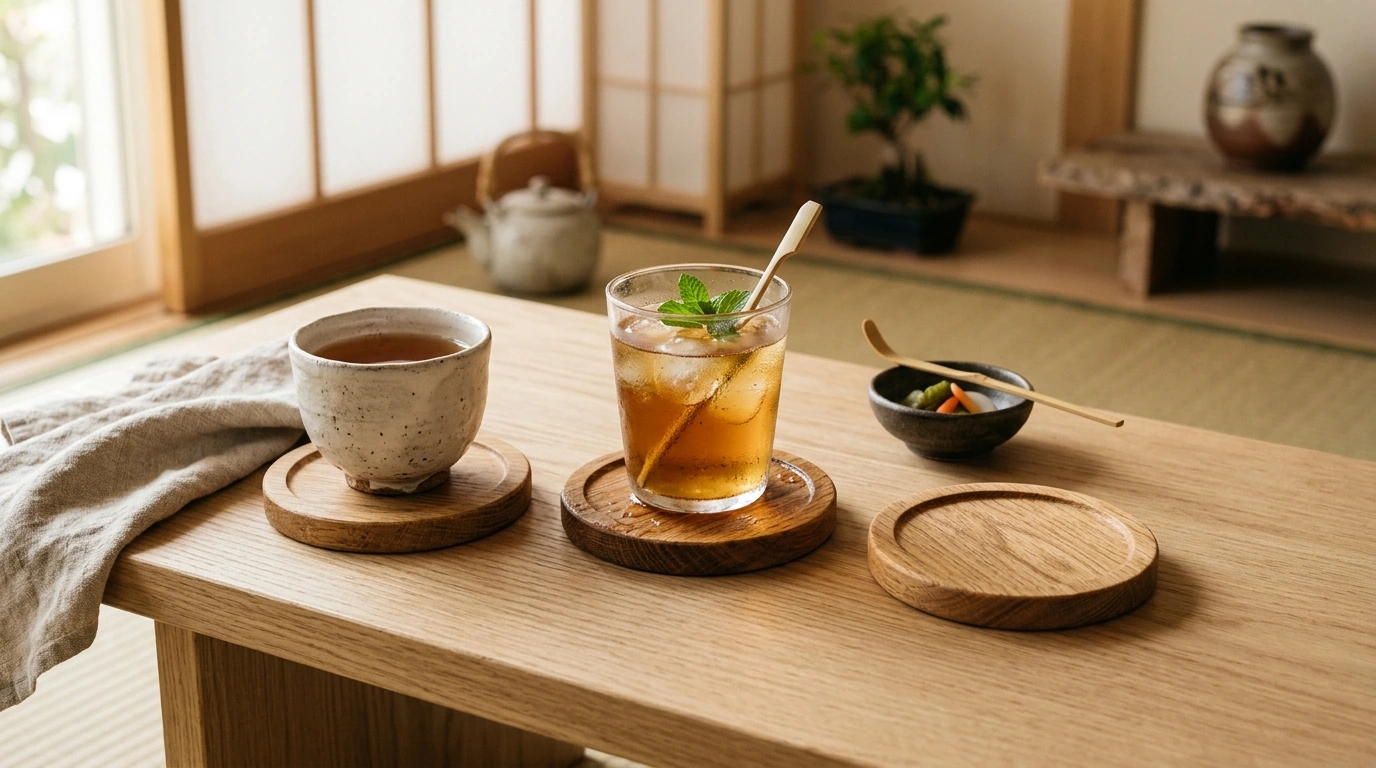
Solid wood coasters add warmth and calm to a table while protecting surfaces from heat, condensation, and small spills. With a Japanese-inspired minimalist feel, these coasters suit tea time, coffee breaks, and evening cocktails—especially when paired with natural fibers and handcrafted ceramics. If you like a tidy, grounded look that still feels welcoming, a well-made set of wood coasters is one of the easiest upgrades to your daily routine. For more guidance, see Behind the Shoji – Hokkaido Marketplace.
Wood brings a quiet presence to a place setting. Instead of drawing attention with shine or bright color, solid wood adds texture and depth—then lets the drinkware and food take center stage. For further reading, see Glass tray and coasters 1970.
Wood movement is also real: humidity and temperature changes can cause subtle expansion and contraction. Choosing a quality coaster with good sanding and a consistent finish helps it stay comfortable to use and easy on furniture (the USDA Wood Handbook offers a deep look at how wood behaves over time).
Not all coasters perform the same. The right match depends on the drinks you serve most and how much moisture you expect to see on the table.
| Material | Best for | Moisture handling | Care notes |
|---|---|---|---|
| Solid wood | Daily coffee/tea, warm table styling | Good with proper finish; wipe promptly | Hand-wipe, dry fully; refresh oil if applicable |
| Cork | Quiet placement, lightweight use | Absorbs moisture; can stain over time | Spot-clean; avoid soaking |
| Stone/ceramic | High condensation (cold drinks) | Excellent; often includes felt backing | Wipe clean; avoid chipping edges |
| Bamboo (laminated) | Budget-friendly sets | Good; varies by glue/finish | Avoid prolonged soaking; dry after wiping |
If you plan to use coasters with food or on surfaces where crumbs collect easily, finishes matter for cleanup. For general background on materials intended for food contact, the FDA overview of food contact substances is a helpful reference point.
A good coaster is practical first, but it can also make drinkware look more intentional—like the difference between setting a mug anywhere and setting it “in its place.”
For a cohesive everyday setup, start with Japanese Solid Wood Coasters and let the grain act as a “neutral” that bridges different materials—glass, ceramic, and metal—without feeling busy.
Solid wood lasts when it’s treated like wood: cleaned gently, dried fully, and protected from prolonged soaking. A few small habits keep coasters looking smooth and even.
If you use coasters outdoors on humid evenings, bring them inside afterward and let them air out. This reduces the chance of lingering moisture dulling the finish.
For ceramics that complement wood beautifully, a rounded, handmade bowl adds softness and balance. Try pairing your coasters with the Handmade Ceramic Noodle Bowl – Creative Round Ramen Soup Deep Bowl for a table that feels crafted, not staged.
To complete the look, add the Scandinavian Handwoven Leaf Placemat – Eco-Friendly Straw Dining Mat for texture, then layer a soft textile underneath like the Bohemian Ethnic Cotton Linen Geometric Tablecloth for Dining & Coffee Tables. The contrast—grain, weave, and ceramic—feels intentional while staying easygoing for daily use.
They can, depending on the wood and finish. A well-finished surface helps resist moisture, but it’s best to wipe promptly, avoid letting water pool, and never stack coasters while they’re still wet.
Wipe with a damp cloth and use mild soap when needed, then dry right away. Avoid soaking and dishwashers; if the finish allows, occasional food-safe mineral oil can help maintain an even look.
Proper sanding and a clean, flat underside greatly reduce the risk. Keep grit off the coaster base, avoid dragging, and use felt pads if they’re included or recommended for extra protection.









Leave a comment