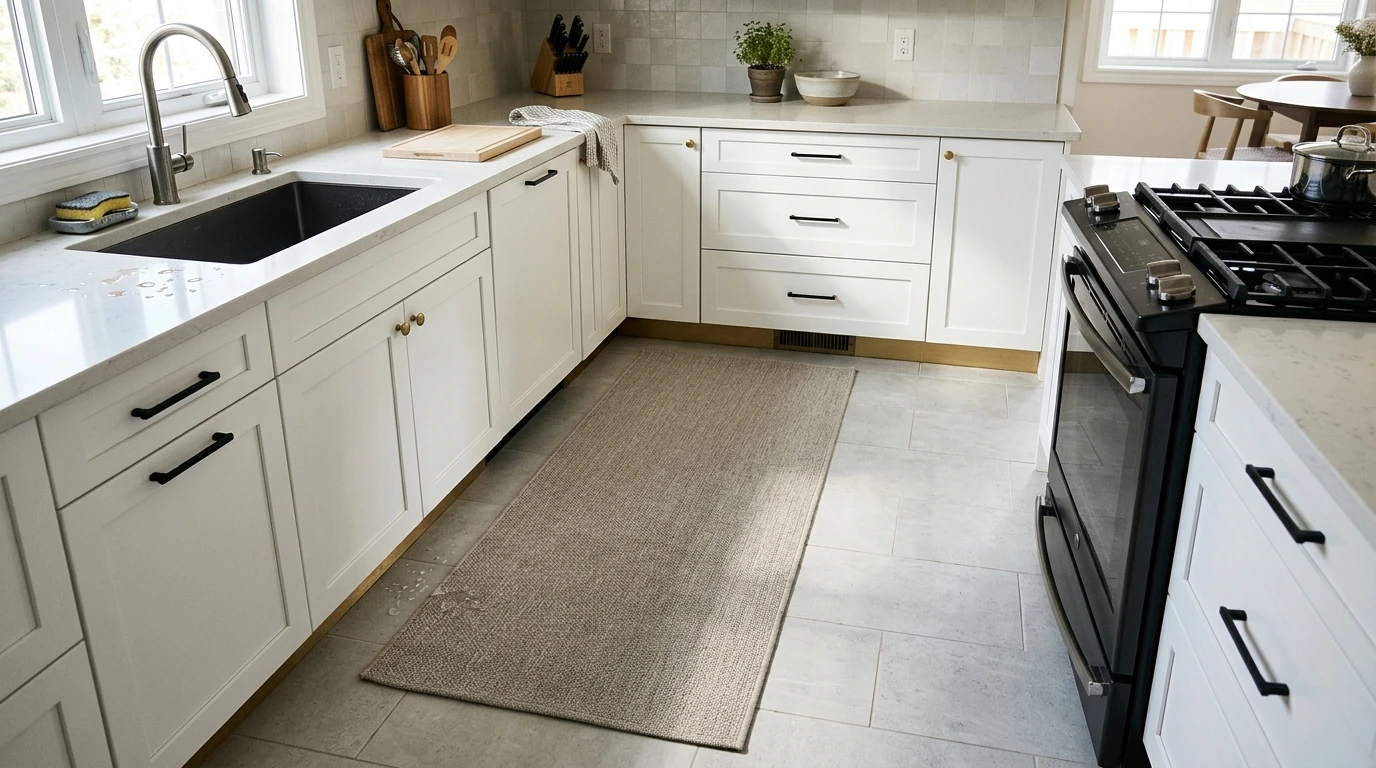
A long kitchen runner can do more than add style—when the material absorbs splashes and the backing grips the floor, it helps keep prep zones cleaner and steadier during everyday cooking. This guide covers what to look for in a polyester-cotton woven kitchen mat, how to size a long runner for common layouts, and how to care for it so it stays comfortable and secure.
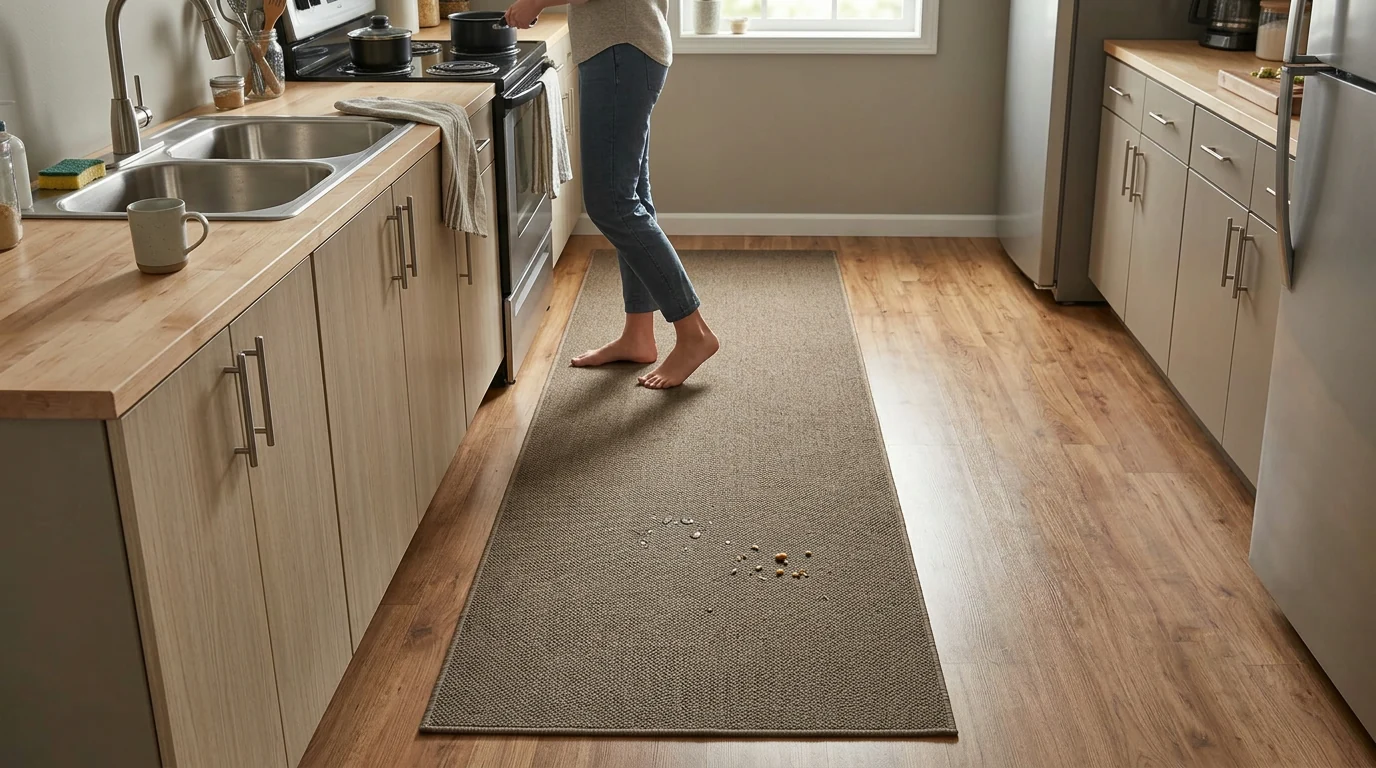
Kitchens are full of “micro-messes”: a few drops at the sink, a damp dish towel drip line, a splash from rinsing produce, or a bit of oil mist near the cooktop. A long runner mat acts like a practical landing strip in the busiest lane of the room.
For safety basics, it’s worth remembering that many slips start with small, routine hazards—tracked-in moisture, spills that weren’t fully dried, or a surface that doesn’t offer enough grip. The CDC’s NIOSH overview on slip, trip, and fall prevention is a helpful reference for thinking through everyday footing risks in walkways.
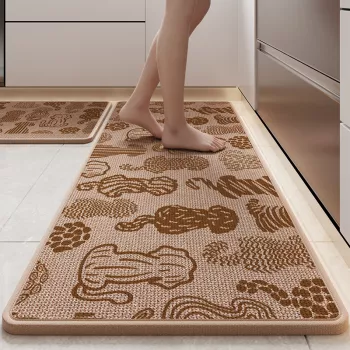
A polyester-cotton blend is popular in high-use home textiles for a reason: it aims for a middle ground between comfort and toughness. In a kitchen runner, that balance matters because the rug gets stepped on, splashed, and cleaned more often than décor pieces in other rooms.
If you ever need to double-check fiber content or washing instructions, care tags are there for a reason. The FTC’s Care Labeling Rule guidance explains what manufacturers are required to provide, which can make it easier to compare mats side by side.
Non-slip backing works best when it can fully contact the floor—no dust layer, no trapped moisture, no curled corners. Before you set the runner down, quickly sweep or vacuum the lane where it will sit, then make sure the underside is dry.
For households that cook frequently, it also helps to do a quick “edge check” after mopping days: if the backing is slightly damp or the floor is still drying, traction can temporarily change.
| Kitchen area | Typical runner length | Placement tips |
|---|---|---|
| Sink run (single long counter) | 6–8 ft | Center on sink; keep ends clear of doorways |
| Galley kitchen walkway | 6–10 ft | Maintain clearance for oven/dishwasher doors |
| Stove + prep zone | 5–7 ft | Start near prep area; avoid direct heat sources |
| Laundry/mudroom adjacent to kitchen | 8–12 ft | Prioritize traction for wet footwear |
Start with a clean, dry tile surface so the backing can grip fully, then lay the runner completely flat and smooth out any ripples. Avoid placing it on top of another rug, and reposition or replace it if corners lift or the underside shows wear.
It can, as long as you follow the care label and avoid harsh bleach or high heat that may degrade the backing. Gentle washing and air-drying when recommended help preserve traction, and it’s smart to inspect the underside periodically for cracking or thinning.
Measure the usable counter run you actually stand on most (often sink-to-stove), then leave a bit of visible floor at both ends so it doesn’t crowd doorways. Many kitchens do well with a 6–8 ft runner for a sink run, adjusting up or down based on appliance door clearance.










Leave a comment