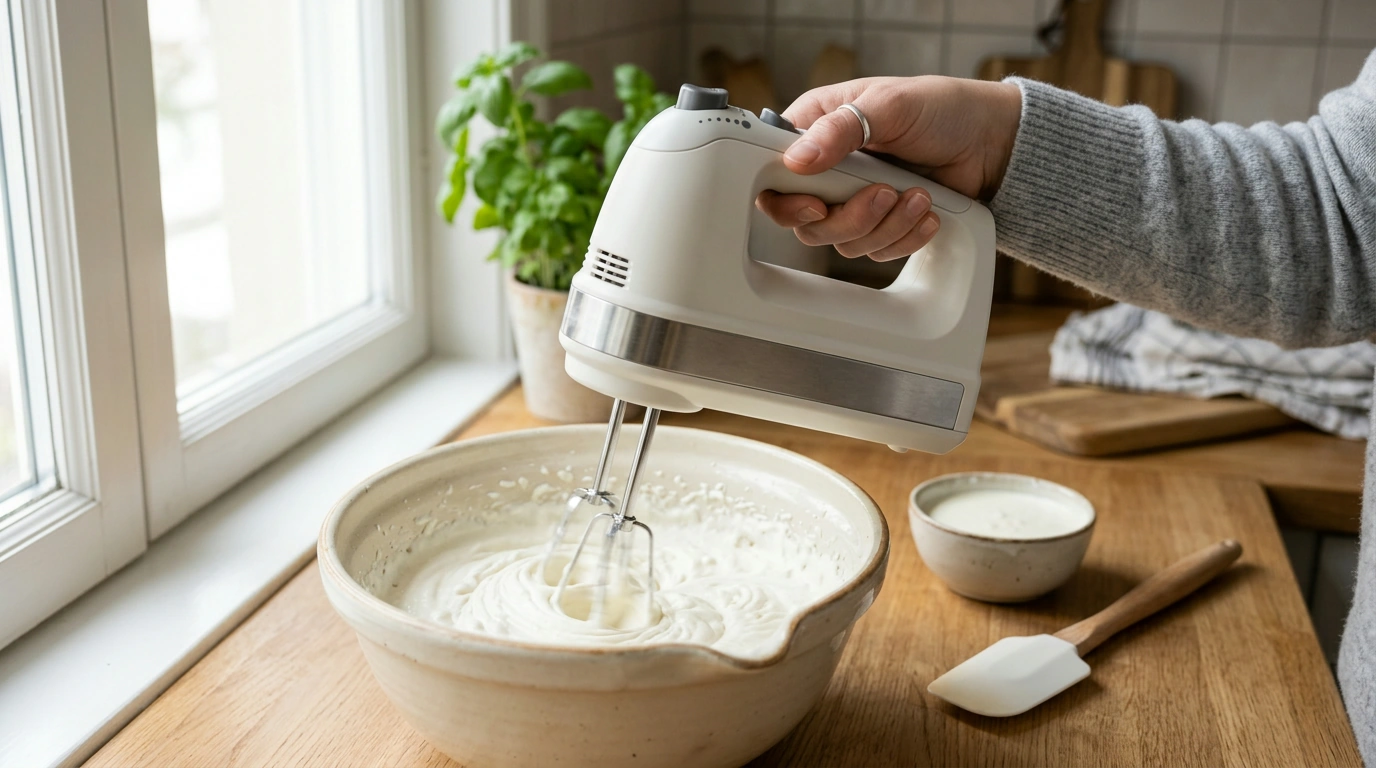
Busy kitchens run smoother when the tools keep up. A cordless hand mixer clears counter space, avoids cord-dragging across bowls, and makes quick work of everyday mixing—from pancake batter to whipped cream. Our team put together this guide to help you use cordless power plus Turbo Boost and variable speed control for better texture, fewer splatters, and faster prep.
Going cordless isn’t just about convenience—it changes your whole workflow from setup to cleanup.
If you’re ready to simplify your daily mixing, our Cordless Electric Hand Mixer with Turbo Boost & Variable Speed Control is built for quick starts, flexible positioning, and fast finish work when mixtures get thick.
Variable speed is where most “better results” actually happen. Instead of treating mixing like an on/off switch, you can match power to what the ingredients need.
| Task | How to start | When to use Turbo Boost | Stop when you see… |
|---|---|---|---|
| Pancake/waffle batter | Low speed to wet the flour | Only for short bursts to remove last small lumps | Batter is mostly smooth; a few tiny lumps are fine |
| Whipped cream | Medium until it thickens | Brief boost near soft peaks if needed | Soft to stiff peaks, depending on recipe |
| Buttercream/frosting | Low to avoid sugar puff | Boost after sugar is incorporated for a fluffier finish | Lightened color and airy texture |
| Mashed potatoes (pre-cooked) | Low to combine butter/milk | Avoid extended Turbo to prevent gluey texture | Creamy and cohesive without overbeating |
| Eggs/omelet base | Low to medium | Not usually needed | Uniform color with a little froth |
Turbo Boost is best treated like a “finish line” button: quick taps when you need a short burst of extra power.
A cordless mixer shines in the small, frequent tasks that don’t justify hauling out a stand mixer.
If you like to mix and serve at the table, pairing a quick cordless prep with a bowl that looks intentional can make even simple meals feel more put together. Our team loves the Handmade Ceramic Noodle Bowl – Creative Round Ramen Soup Deep Bowl for deep sides that help contain splatter during mixing and feel right for serving after.
To keep your dining surface protected and styled, you can layer in natural texture with our Scandinavian Handwoven Leaf Placemat – Eco-Friendly Straw Dining Mat or set the scene for a bigger spread with the Bohemian Ethnic Cotton Linen Geometric Tablecloth for Dining & Coffee Tables.
For extra guidance on battery safety and everyday cleaning habits, you can reference the U.S. Consumer Product Safety Commission (CPSC) lithium-ion battery safety tips and the CDC’s everyday cleaning steps.
Use Turbo Boost in short bursts near the end of mixing or when a mixture suddenly thickens and needs a quick push. It’s ideal for finishing texture quickly, but it shouldn’t replace normal variable-speed mixing for the full job.
Starting on low speed helps dry ingredients absorb liquids without flinging outward, and stepping up gradually lets you smooth the mix without beating it longer than necessary. You’ll get better control when you stop as soon as the mixture reaches the texture your recipe calls for.
Remove the beaters/attachments and wash them separately, then wipe the mixer body with a damp cloth without soaking it. Dry everything fully before reattaching parts, and keep the charging area clean and dry.







Leave a comment