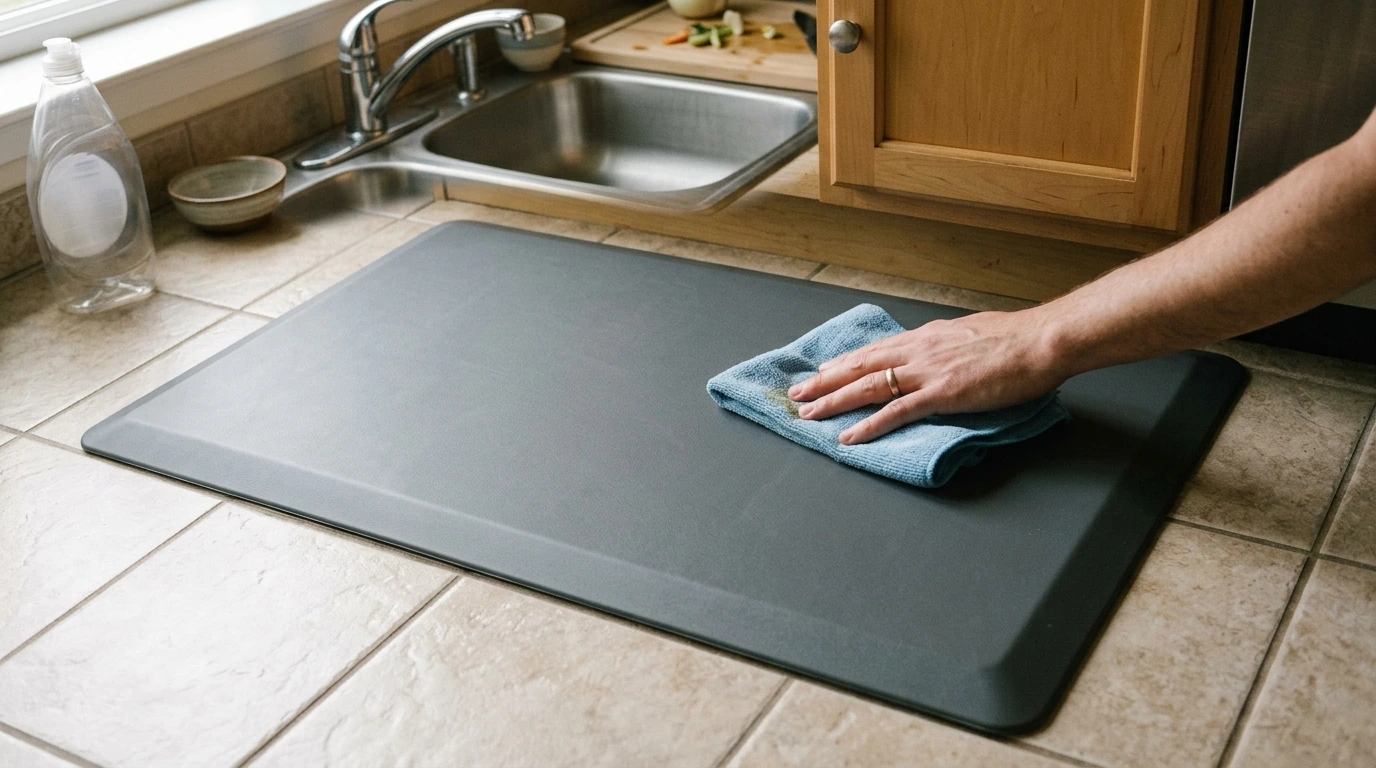
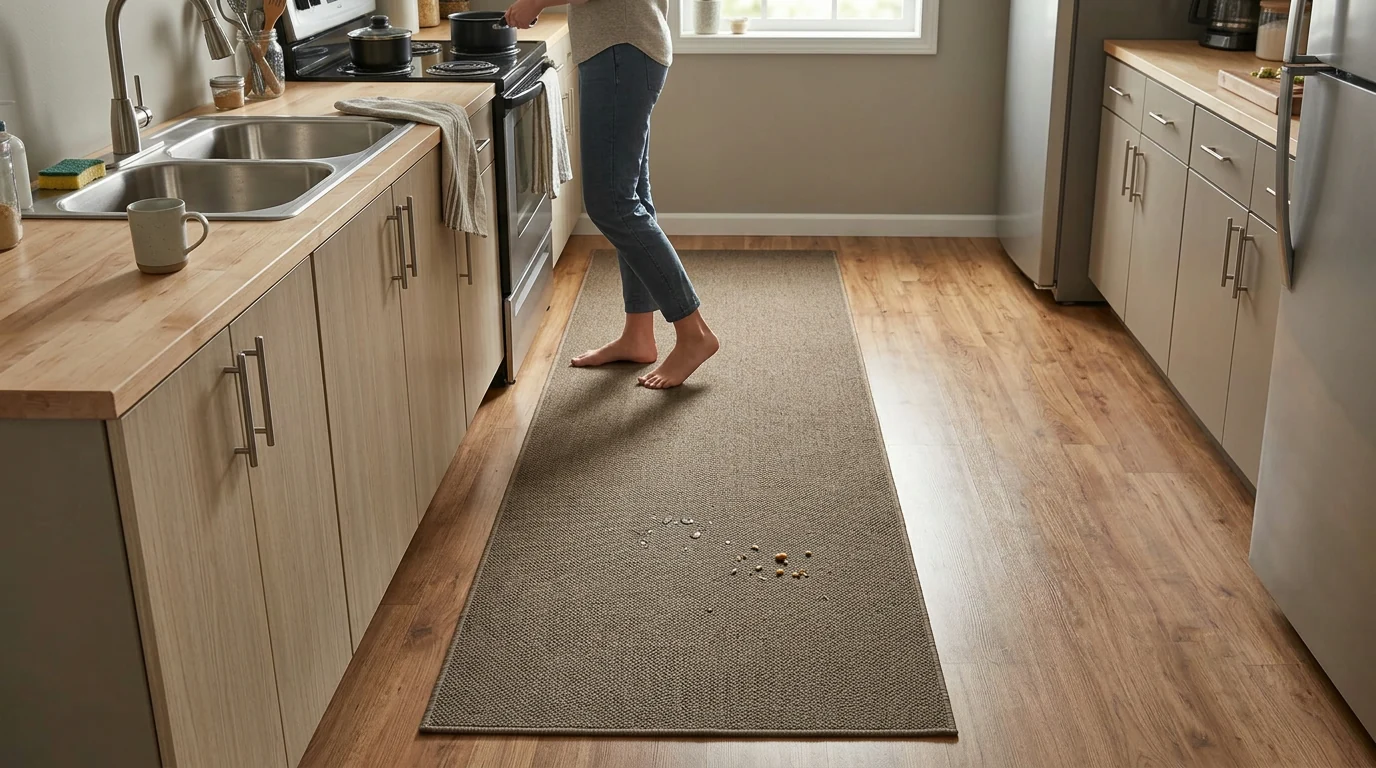
Busy kitchens don’t stay spotless for long—water splashes, oil drips, and constant foot traffic are part of the routine. A good floor mat should protect the floor, stay put when you pivot from stove to sink, and wipe clean fast. Our waterproof non-slip kitchen floor mat is built for everyday cooking: oil-resistant, low-fuss to clean, and comfortable where you stand the most.
A kitchen mat earns its place by solving the most common “daily mess” problems without adding extra chores.
| Feature | Typical fabric rug | Waterproof non-slip kitchen mat |
|---|---|---|
| Handling spills | Soaks in; can stain and hold odors | Keeps spills on the surface for wiping |
| Traction | May slide without an added pad | Designed to grip and stay in place |
| Cleaning time | Often needs washing and drying | Wipe-clean routine fits daily cooking |
| Best spots | Low-mess areas | Sink, prep zone, stove area |
Cooking mess is rarely just water. Oil splatter, sauces, and greasy footprints can build up faster than expected—especially in the zones you use every day.
For broader guidance on slip prevention in walking areas, you can also reference NIOSH’s slip, trip, and fall prevention resources and OSHA’s walking-working surfaces standards.
Your highest-traffic routes are where traction matters most: turning with a hot pan, stepping back from the oven, or shifting weight while washing dishes.
The easiest mat to live with is the one you can reset quickly—without turning cleanup into a weekend project.
| Mess type | What to do | How often |
|---|---|---|
| Water splashes | Wipe with a damp cloth; dry if needed | As they happen |
| Oil splatter | Warm water + mild dish soap; rinse | As needed |
| Crumbs and grit | Shake out or wipe; vacuum around edges | Daily or every few days |
| Deep refresh | Clean top and underside; wipe floor area beneath | Weekly or biweekly |
Standing at the sink and prep counter can feel longer than it looks on the clock. A supportive mat helps take the edge off hard flooring so you can prep, wash, and plate with less foot fatigue.
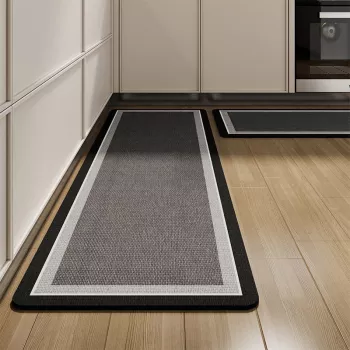
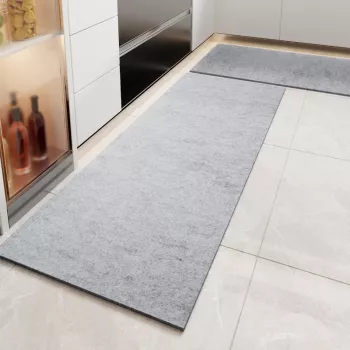
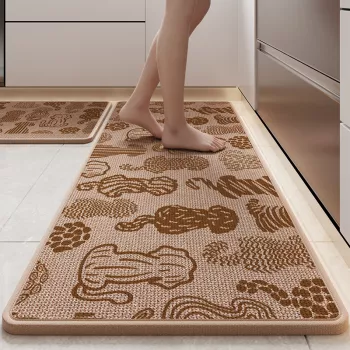
If you want a mat that keeps up with everyday cooking (not just “company’s coming” kitchens), our team recommends the Waterproof Non-Slip Kitchen Floor Mat – Easy Clean & Oil-Proof Comfort Rug.
| Product | Price | Availability |
|---|---|---|
| Waterproof Non-Slip Kitchen Floor Mat – Easy Clean & Oil-Proof Comfort Rug | $36.67 USD | In stock |
Use warm water with a small amount of mild dish soap to break down grease, then rinse and let it dry fully. Avoid waxy cleaners or oily polishes that can leave residue.
Non-slip mats generally grip best on smooth, clean, dry floors. Wipe the floor before placing the mat and keep the underside free of dust for consistent traction.
Start at the sink or main prep area—these are the longest-standing zones and often the wettest spots, so comfort and waterproof performance matter most there.







Leave a comment