DIY Spice Blends & Seasoning Mixes Checklist: a simple system for stocking, mixing, and cooking on autopilot
Homemade spice blends make weeknight cooking faster, more flexible, and easier to keep organized—especially when the pantry starts to feel like a jumble of half-used jars. Our DIY Spice Blends & Seasoning Mixes Checklist (Digital Download) is built as a practical kitchen tool: a quick way to decide what to mix, what to restock, and how to label and rotate blends so the flavors stay bright and meals stay easy.
Why homemade seasoning mixes change the way your kitchen runs
When you keep a small “starter library” of blends ready to go, cooking becomes more like assembly than decision-making. Here’s what tends to shift right away:
- Less decision fatigue: a small set of go-to blends covers most everyday meals (roasted vegetables, sheet-pan proteins, soups, grain bowls).
- Better control: you can adjust salt, heat, and sweetness for dietary needs and taste preferences—without hunting for specialty versions.
- Fresher flavor: mixing smaller batches and storing correctly keeps aromatics lively compared with blends that sit for long periods.
- Lower waste: you’ll use up single spices that otherwise linger in the back of the cupboard.
What our checklist is designed to do (so you actually use it)
Our team built the checklist around the moments where spice organization usually breaks down: shopping without a plan, mixing without labeling, and forgetting what you already made.
- Act as a repeatable workflow: choose a blend, confirm ingredients on hand, mix, label, and note the date—then cook with it all week.
- Keep pantry inventory clear: track core spices, “running low” items, and blends already mixed so duplicates don’t pile up.
- Support meal planning: align blends with the meals you make most often (tacos, stir-fries, soups, marinades).
- Make organization visible: a checklist turns a vague goal (“organize spices”) into a short, finishable task.
A quick setup that makes the checklist work harder
You don’t need a pantry makeover—just a few standards that remove friction.
- Choose containers first: small jars or tins that stack neatly and seal well beat a mix of random shakers.
- Standardize batch size: pick one “small batch” volume (enough for roughly 6–10 uses) so blends stay fresh and are easy to remake.
- Label with three details: blend name, mix date, and a simple use note (like “rub,” “soup,” or “all-purpose”).
- Store for flavor: keep blends away from heat and light; a cabinet away from the oven helps preserve potency.
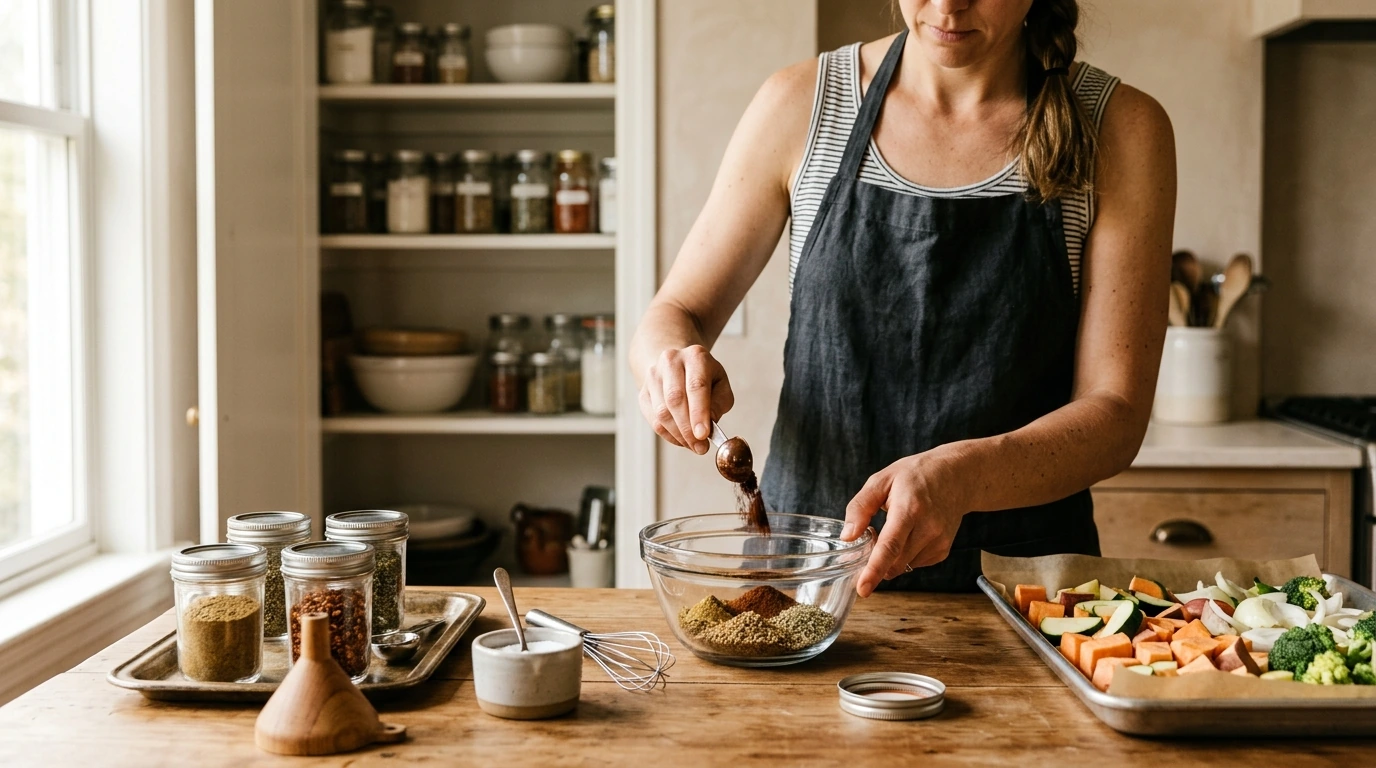
- Create one mixing zone: keep a small tray with a funnel, measuring spoons, and labels so you can mix quickly.
Blend building blocks: a simple formula for balanced flavor
Most “why does this taste flat?” moments come down to balance. Use these roles as a mental shortcut when you build or tweak a mix:
- Base: paprika, cumin, coriander, garlic/onion powders, dried herbs—these carry the main flavor profile.
- Heat: chili powder, cayenne, red pepper flakes—add gradually and record the level you like.
- Brightness: black pepper, dried mustard, sumac, citrus zest powders—these make a blend taste “finished.”
- Depth: smoked paprika, chipotle, toasted spices—brings roastiness and complexity.
- Salt & sweetness (optional): keep separate when flexibility matters, especially for rubs and marinades.
Everyday spice blends: what to use them on (quick reference)
| Blend type |
Best with |
Fast use idea |
Pantry notes |
| All-purpose savory |
Chicken, vegetables, beans |
Toss with olive oil + roast |
Make without salt for flexibility |
| Taco-style |
Ground meat, beans, roasted cauliflower |
Stir into cooked protein + splash of lime |
Keep chili heat adjustable |
| Italian herb |
Tomatoes, pasta, fish, white beans |
Mix into marinara or olive-oil dip |
Dried herbs fade—small batches help |
| Curry-inspired |
Chickpeas, lentils, rice bowls |
Bloom in oil, then add onions/garlic |
Store airtight; aroma carries |
| BBQ-style rub |
Pork, chicken thighs, roasted sweet potato |
Rub + rest 15 minutes before cooking |
Consider keeping sugar separate if preferred |
How to use the checklist as a weekly routine (15–30 minutes)
Organization tips that keep blends easy to reach (and easy to remake)
Storage and freshness: small steps that protect flavor
Freshness is mostly about moisture, air, and heat. Two reliable references our team likes for broad food-storage best practices are the USDA FoodKeeper App and the National Center for Home Food Preservation.
A simple starter plan: build five blends that cover most meals
Make it a set: serving and table pieces that fit the homemade-kitchen rhythm
FAQ
How do spice blends stay fresh the longest once mixed?
They last longest in airtight containers stored away from heat and light, with small batch sizes so you use them while aromatics are still strong. Date your labels, and avoid moisture contamination by measuring spices into a spoon instead of shaking over steam.
Can seasoning mixes be made without salt or sugar?
Yes—making blends salt-free and sugar-free gives you more control, so you can season to taste during cooking and adapt for dietary needs. This also helps prevent accidental over-salting when a recipe already includes salty ingredients.
What are the best first blends to make for beginner home cooks?
Start with five that cover the most meals: all-purpose savory, taco-style, Italian herb, curry-inspired, and a BBQ-style rub. Test them across proteins, vegetables, and soups so you learn quickly what you like and what to tweak.
Recommended for you









Leave a comment