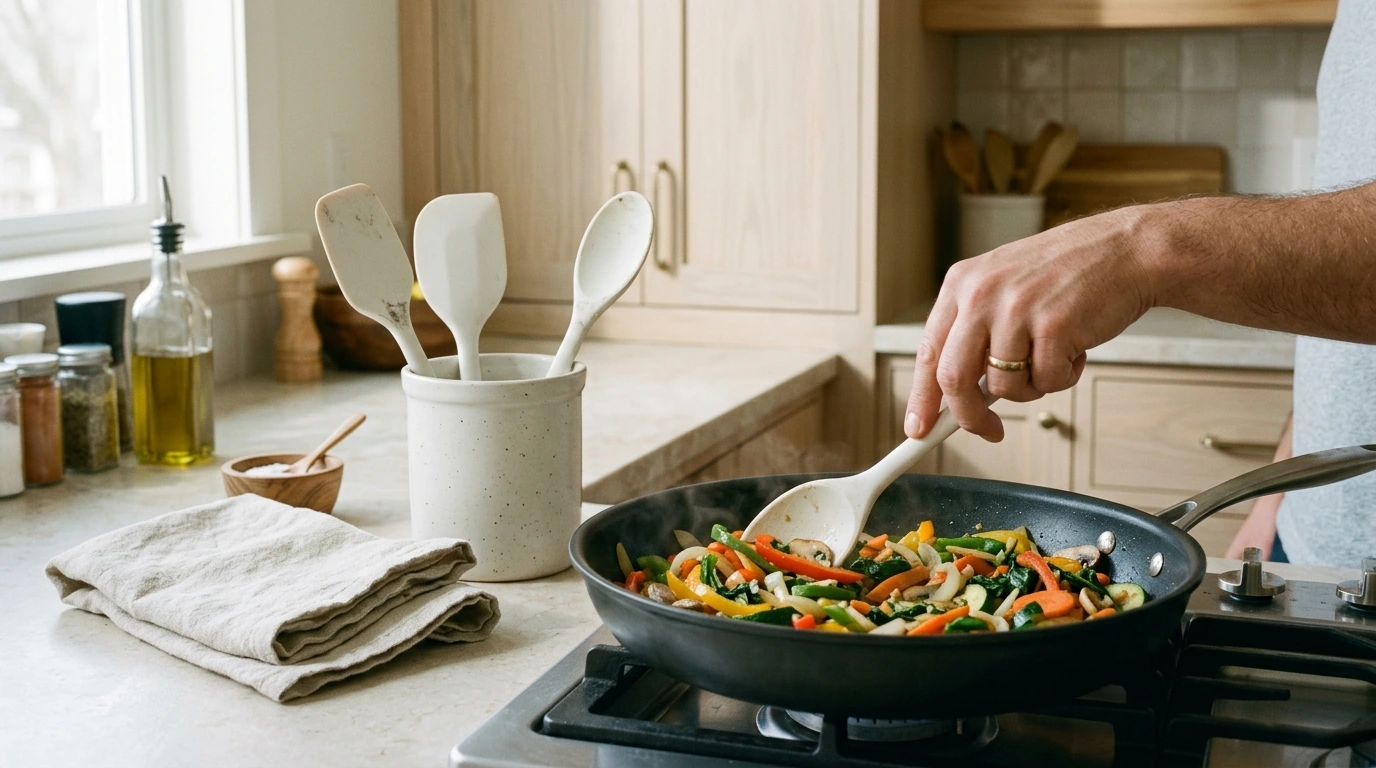
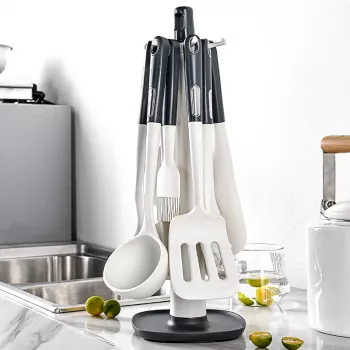
A well-chosen silicone kitchen cookware set can make daily cooking smoother: fewer scratched pans, quieter stirring, and tools that feel gentle on nonstick surfaces. Our White Silicone Kitchen Cookware Set brings a bright, minimal look to the countertop while covering the core utensils most kitchens reach for every day—from flipping and scraping to serving and stirring. Use this guide to match the set to the way meals actually get made: quick breakfasts, weeknight dinners, and weekend prep. For more guidance, see How to Choose Safer Cookware and Kitchen Tools.
When you’re cooking often, little frictions add up—noisy tools, scuffed pans, and utensils that feel awkward in the hand. Silicone helps smooth out those daily moments. For further reading, see 6 Best Non-Toxic Cooking Utensils and Materials.
| Kitchen task | What a silicone tool helps with | Best-use tip |
|---|---|---|
| Scraping bowls and pans | Flexible edge that follows curves, reducing leftover batter/sauce | Use a gentle, continuous sweep around the bowl to avoid splatter |
| Flipping and turning | Softer contact on coated surfaces | Slide under foods fully before lifting to prevent tearing |
| Stirring sauces and soups | Less scratching and less clatter on cookware | Stir along the bottom edge to keep sauces moving evenly |
| Serving | More control than flimsy plastics; less risk of scraping cookware | Let foods drain briefly over the pot before plating |
Our team recommends thinking in “motions,” not just tool names—because what you really need is coverage for the tasks you repeat every day.
If your current drawer forces you to “make do” (using a spoon where a scraper would be cleaner, or avoiding certain pans because you’re worried about scratches), a coordinated set like our White Silicone Kitchen Cookware Set is a practical reset.
This set is built for real-life kitchens—where breakfast happens fast, lunches are improvised, and dinner might be a one-pan meal followed by a quick cleanup.
Silicone is easygoing, but a few habits keep it looking and smelling clean—especially in an all-white palette.
For broader kitchen sanitation basics, you can also reference the USDA Food Safety and Inspection Service guidance on kitchen safety and sanitation.
| Add-on | Why it pairs well | When it shines |
|---|---|---|
| Handmade Ceramic Noodle Bowl – Creative Round Ramen Soup Deep Bowl | Completes soup, ramen, and grain-bowl nights with a dedicated deep bowl | Quick broth dinners, leftovers that feel intentional |
| Scandinavian Handwoven Leaf Placemat – Eco-Friendly Straw Dining Mat | Adds warm texture against white utensils and light tableware | Everyday lunches, casual hosting |
| Bohemian Ethnic Cotton Linen Geometric Tablecloth for Dining & Coffee Tables | Creates a clean base for family-style meals and protects the table | Weekend brunch, dinner parties, seasonal refresh |
For additional background on materials intended for food contact, the U.S. Food & Drug Administration (FDA) overview of food contact substances is a helpful reference point.
Silicone utensils made for kitchen use are intended for food contact, and using them as directed—especially keeping them away from direct flame contact—helps maintain performance. Follow the care instructions and replace any tool that shows damage, peeling, or cracking.
Silicone is generally softer than metal, so it’s less likely to scratch or scuff nonstick coatings during everyday stirring, flipping, and scraping. You’ll still get the best results by using a gentle hand and avoiding sharp, digging motions.
Wash soon after cooking with warm, soapy water, then dry completely before storing to prevent lingering odors. If a smell hangs on, a deeper clean and good airflow during storage typically resolves it.









Leave a comment