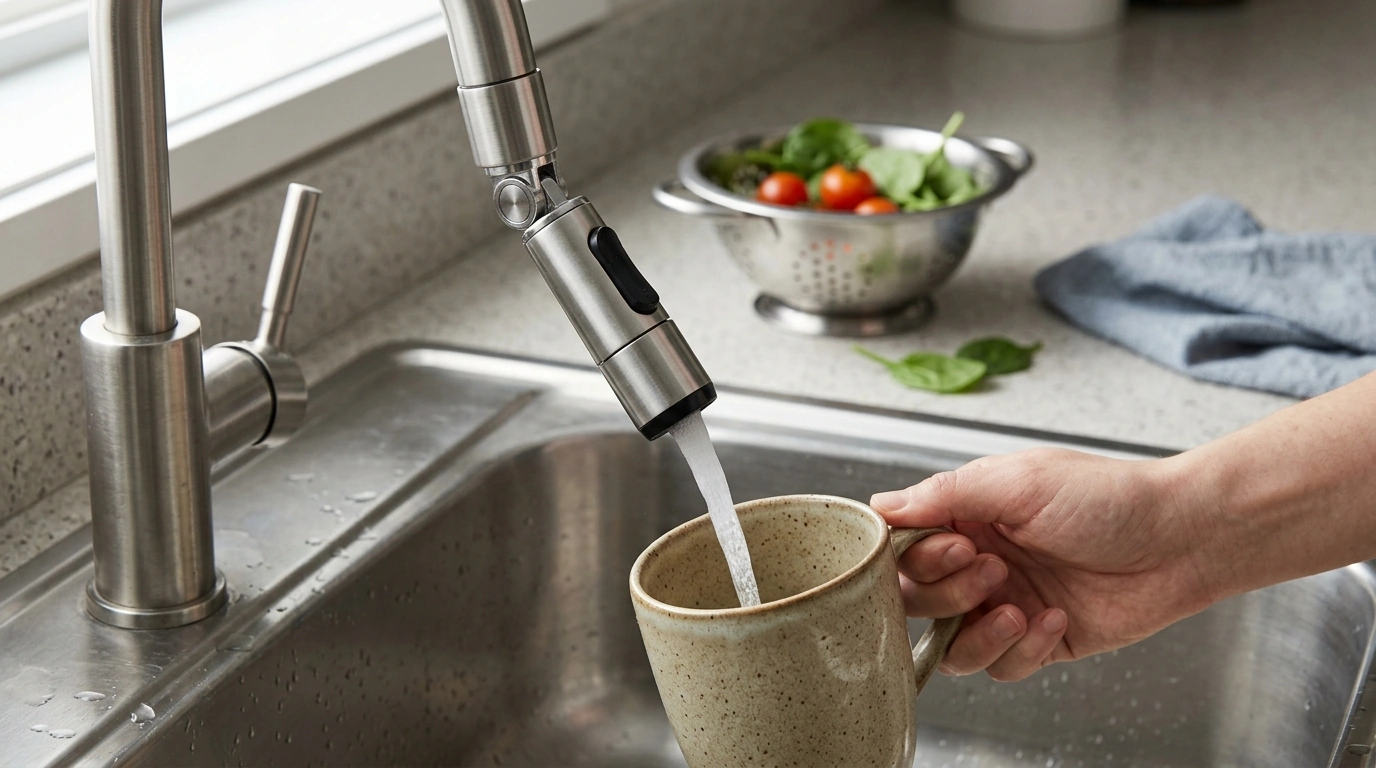
A faucet works best when the water lands exactly where it’s needed. A rotatable faucet extender adds reach and direction control, helping reduce splash, making rinsing more efficient, and supporting water-conscious habits. Our 360 Rotatable Faucet Extender with 2 Modes is designed for everyday kitchen and bathroom routines—quick to use, easy to switch between flow styles, and simple to keep as a go-to sink accessory.
Most sink frustrations come from the same issue: the water stream is fixed, but your tasks aren’t. Adding a pivoting tip gives you more control over where water goes, without wrestling a pot, twisting your wrists, or rinsing at an awkward angle.
If you’re trying to build better habits at the sink, small adjustments matter. Practical resources like EPA WaterSense focus on everyday ways to use water more efficiently, and better control at the faucet can make those routines feel easier to stick with.
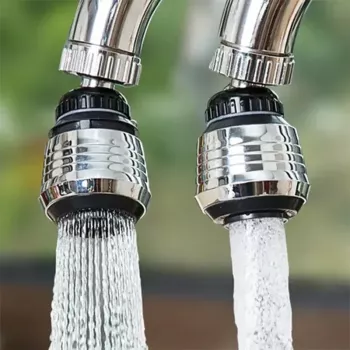
Not every rinse needs the same intensity. Two modes let you shift from “get it done fast” to “keep it calm and controlled,” depending on what you’re washing and how splash-prone your sink setup is.
| Task | What to aim for | Mode to try first |
|---|---|---|
| Handwashing | Comfortable flow with less splash | Controlled flow |
| Rinsing a cup or glass | Quick coverage inside and outside | Quick rinsing |
| Rinsing produce | Even rinse without blasting delicate items | Controlled flow |
| Clearing suds from dishes | Faster rinse to finish up | Quick rinsing |
| Cleaning the sink corners | Directed stream to targeted areas | Quick rinsing |
For handwashing specifically, technique matters as much as tools. The CDC handwashing guidance is a helpful baseline for timing and steps; a controlled flow can make rinsing more comfortable and less splashy, so you’re not wiping down the counter afterward.
The biggest “aha” moment with a rotating tip is how often you use it once it’s there—especially in kitchens where the sink is busy and you’re switching between tasks fast.
Rotation and mode switching don’t automatically reduce water use, but they make it easier to rinse efficiently and avoid “let it run while I figure it out” moments.
Our team recommends treating installation like a quick reset for your faucet tip: clean contact points, attach securely, then test both modes right away so you know what “normal” looks like.
Many extenders are made for common faucet tip sizes, but faucet ends can vary by style and threading. Before you order, identify your faucet tip type and, after installation, confirm you have a snug fit with no leaking when the water is running.
One mode is typically stronger and faster for rinsing dishes, clearing suds, and speeding through cleanup. The other is more controlled for everyday handwashing and gentle rinsing, especially when you want less splash and overspray.
Wipe the outlet area regularly and, if mineral deposits are common where you live, clean it periodically so openings don’t get partially blocked. After cleaning, run water briefly and test both modes to make sure the stream looks even again.










Leave a comment