Single-Layer Non‑Stick Stainless Steel Cooling Rack for Baking and BBQ: Crisp, Cool, Rest, Repeat
A cooling rack is one of those tools that quietly improves everything: cookies set without steaming, glazes drip cleanly, and grilled foods rest without turning soggy. Our Single Layer Non-Stick Stainless Steel Cooling Rack for Baking and BBQ is built for everyday baking jobs and the in-between moments that make cooking smoother—cooling, draining, resting, and prepping for the grill.
Why a single-layer rack earns a permanent spot on the counter
When you lift food off a flat surface, you change what happens in those first few minutes after cooking—often for the better.
- Airflow is the entire point: Elevation helps heat and steam escape so bottoms stay drier and textures stay crisp.
- Cleaner finishes for icing and glazing: Drips fall away from pastries, donuts, and cakes instead of pooling at the base.
- Better cooling means better structure: Cookies, bars, and breads firm up more evenly when they’re not trapping moisture underneath.
- Simple handling: A single-layer design is easy to move from pan to counter, easy to rinse, and easy to store flat.
Non-stick + stainless steel: what that changes in daily use
The materials you choose show up most in cleanup and release—especially once sugar or sauce cools and tightens.
- Non-stick helps with release: Great when foods cool and cling a bit, like caramelized cookies or sticky marinades after resting.
- Stainless steel is a practical staple: It’s widely used for kitchen tools because it resists rust better than many other metals when cared for properly (for general properties and care, see the Nickel Institute overview of stainless steel in the home).
- Faster cleanup: Better release usually means fewer baked-on spots and less time soaking or scrubbing.
- Sweet and savory flexibility: One rack can handle cookies today and BBQ chicken tomorrow without becoming a one-job accessory.
Everyday baking jobs this rack handles well
If you bake even occasionally, a rack tends to pay for itself in better texture and less mess.
- Cookies and brownies: Move baked goods off a hot pan to reduce carryover cooking and keep edges/crust where you want them.
- Breads and rolls: Cool loaves so crust stays crisp instead of turning leathery from trapped steam underneath.
- Glazed bakes: Set the rack over parchment or a tray to catch drips from donuts, scones, and loaf cakes.
- Fried or oven-crisp foods: Drain and cool wings, fries, and breaded cutlets so they stay crisper than they would on paper towels alone.
- Chocolate-dipped treats: Let coatings set with fewer flat spots and cleaner edges.
BBQ and grill prep: small moves that keep food better
Grill days run smoother when you give cooked food a place to rest that won’t soften the outside you worked for.
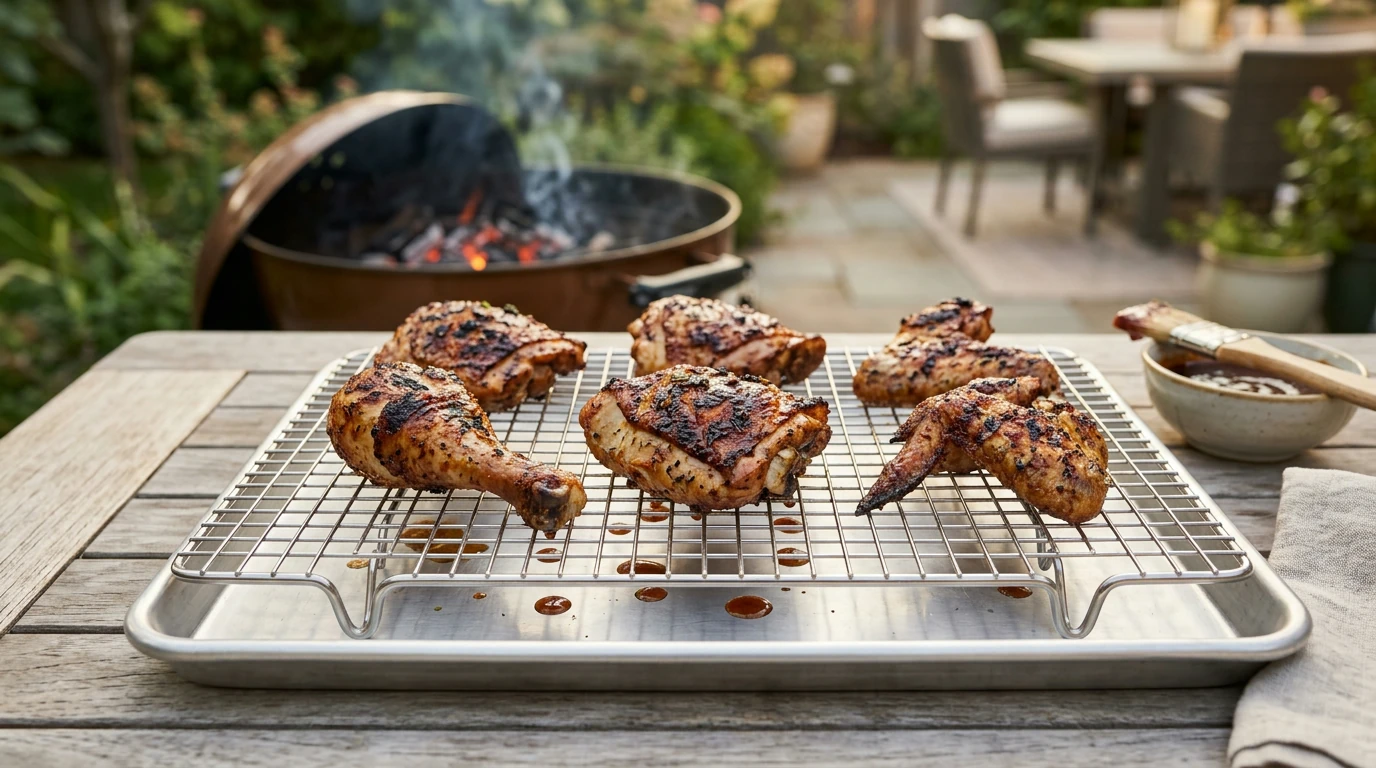
- Resting station for meats: Placing proteins on a rack helps keep bark and skin from steaming while juices redistribute.
- Saucing and glazing: Brush sauce while items sit elevated; excess drips away instead of pooling and over-thickening on the bottom.
- Transfer and staging: Use the rack as a clean landing spot for cooked foods to keep them out of puddles and away from crowded cutting boards.
- Food-safety rhythm: Keep raw and cooked zones separate, and use temperature guidance for doneness (the USDA FSIS safe minimum internal temperature chart and the FDA consumer food-safety basics are dependable references).
On serving side, pairing your rested proteins with a table setup you don’t have to baby helps, too—our team often stages a hot platter over a Scandinavian Handwoven Leaf Placemat and keeps the meal easy with a wipe-friendly, everyday Bohemian Ethnic Cotton Linen Geometric Tablecloth.
Care that keeps a non-stick rack working longer
Quick decision guide: when a rack beats a flat pan (and when it doesn’t)
Best tool for the job (fast picks)
| Task |
Use the cooling rack |
Use a flat lined pan |
| Cooling cookies, scones, bread |
Yes—improves airflow and prevents soggy bottoms |
Only if recipe calls for cooling on the pan |
| Glazing donuts or loaf cakes |
Yes—clean drips and even setting |
Works, but glaze can pool and stick |
| Draining fried foods |
Yes—helps keep crust crisp |
Paper towels can soften the bottom over time |
| Roasting items that benefit from circulating heat |
Yes—rack over a sheet pan can reduce steaming |
Yes—best for items that need direct contact to brown underneath |
| Resting grilled meats |
Yes—helps protect crust and keeps juices from soaking the underside |
A plate can trap steam; a board is fine but can get messy |
Fit and setup checklist (before the first bake)
And when it’s time to serve something saucy or brothy after the grill—ramen, pho-style noodles, or a quick marinade-to-table appetizer—our Handmade Ceramic Noodle Bowl – Creative Round Ramen Soup Deep Bowl keeps portions contained and the table calmer.
FAQ
Can this cooling rack go in the oven or be used near a grill?
Stainless cooling racks are commonly used for oven tasks and as a resting/staging surface for BBQ. For best stability and drip control, set the rack over a sheet pan, and avoid placing it over direct flame or where sugars can burn onto the surface.
How do you clean a non-stick cooling rack without damaging the finish?
Let it cool, then soak in warm, soapy water and use a soft sponge or gentle brush. Avoid steel wool and harsh abrasives, and dry thoroughly; sticky glazes and sugars may need a longer soak.
What’s the best way to use a rack for glazing or draining?
Place the rack over a lined sheet pan or tray to catch drips, then space items so air can circulate and let them set undisturbed. For fried foods, keep pieces separated and move them if needed so the underside stays crisp while excess oil drains away.
Recommended for you








Leave a comment