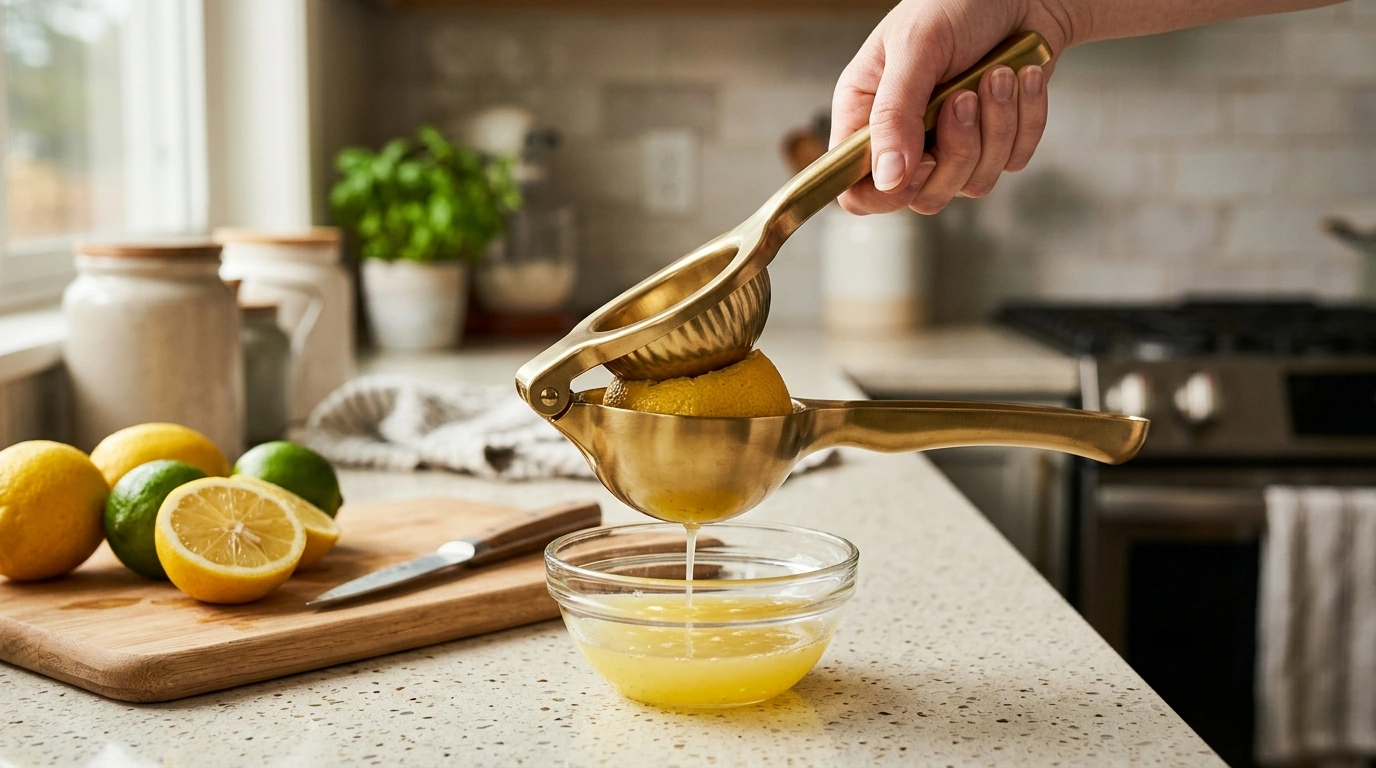
Fresh citrus juice changes everything—salad dressings wake up, marinades balance, and water turns into something worth sipping. A stainless steel citrus juicer manual hand press fruit squeezer keeps that habit simple: cut, press, pour, rinse. Our premium gold stainless steel citrus juicer is designed for quick daily use, compact storage, and a clean pour straight into a glass, bowl, or measuring cup.
If you’ve ever skipped a recipe step because “juicing a lemon” felt like a hassle, a hand press is the small tool that removes that friction. You get bright flavor on demand, with control over pulp and seeds and without the noise or footprint of an electric machine.
A manual press shines in the moments that make up most home cooking: one lemon here, a lime there, two oranges on a weekend morning. It’s built around speed and control.
| Feature | Manual citrus juicer | Electric juicer |
|---|---|---|
| Best for | 1–4 citrus at a time, cooking + drinks | Higher volume batches |
| Setup/cleanup | Rinse and wipe (few parts) | More components to wash |
| Counter space | Small footprint | Often larger footprint |
| Noise | Quiet | Motor noise |
| Control | Stop anytime; easy pulp control | Continuous until switched off |
Citrus is demanding: it’s acidic, aromatic, and used often. Stainless steel is a practical match for that routine, and it fits naturally into a kitchen workflow where you’re moving between cutting boards, bowls, and glassware.
If you like reading up on what’s considered safe and common for food-contact materials, the U.S. FDA’s overview of food contact substances is a helpful reference point.
Our team’s favorite part of a manual press is how much technique matters—in a good way. A couple small habits make juicing faster, cleaner, and more consistent.
Fresh citrus is also a simple way to add vitamin C to your day; Harvard’s nutrition overview on vitamin C is a solid primer if you like the bigger picture behind everyday ingredients.
When you do prep ahead, food-safety storage basics matter. The USDA FoodKeeper App is a reliable place to check general guidance for refrigerated storage times and best practices.
Lemons, limes, and small to medium oranges are the sweet spot, plus similar-sized citrus like mandarins. For very large fruit, it can be easier to work in batches (or cut into smaller sections), and rolling the fruit before halving helps it release juice more easily.
Press with the cut side positioned down and apply pressure slowly so seeds stay put instead of popping free. When you need a perfectly seed-free pour (like for cocktails or baking), strain the juice through a small mesh strainer.
Store it in a clean, covered container in the refrigerator to help preserve freshness and prevent off flavors from nearby foods. Citrus juice tastes brightest right after pressing, so use it as soon as you can, and follow general storage guidance from sources like USDA FoodKeeper.











Leave a comment