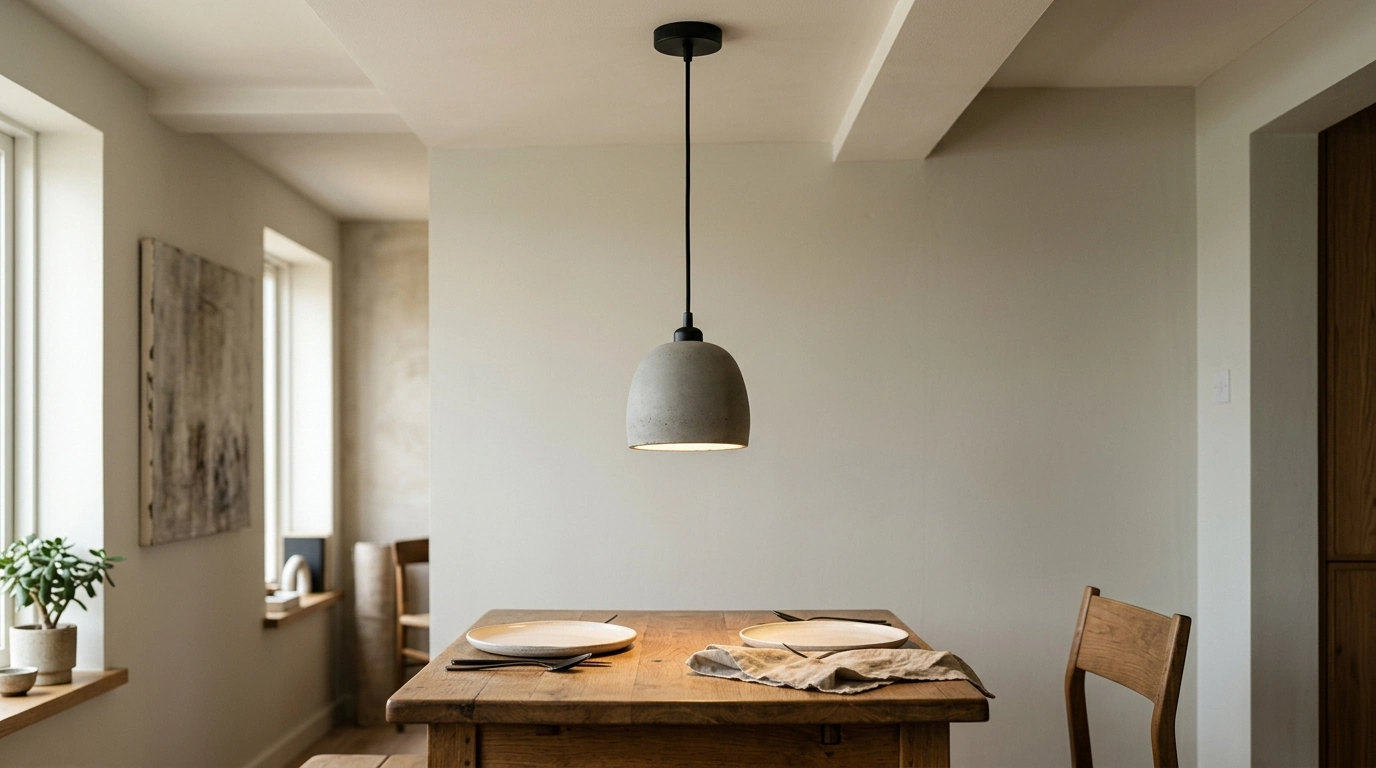
Clean lines, honest materials, and warm light can change the feel of a kitchen or dining area without changing everything else. Our modern cement pendant light is designed for everyday homes that want a calmer, more intentional look—whether it hangs above a dining table, a breakfast bar, or a small reading corner. If you’re aiming for minimalism that still feels livable, cement is one of the easiest ways to add structure without adding visual noise. For more guidance, see Modern Ceiling Lighting Ideas | Shelly Lighting.
Cement brings a grounded, architectural presence that plays well with the materials you already have around a dining space. Unlike glossy finishes that can feel “decorative,” cement reads as straightforward and functional—exactly what modern rooms tend to need. For further reading, see 2026 Best Island Lights | thehomegoat.
If you’re also trying to keep energy use sensible, LED lighting is a practical match for daily-use spaces. The U.S. Department of Energy’s guide to efficient lighting is a helpful reference for understanding why LED is typically the go-to for long-term savings and longevity: https://www.energy.gov/energysaver/lighting-choices-save-you-money.
Minimalist pendants shine (literally and visually) when you place them where you want a “center of gravity” in the room. Our team recommends starting with the surface you use most—then choosing the placement that supports how you actually live.
| Placement | What it adds to the room | Style pairings |
|---|---|---|
| Centered over a round table | A calm focal point that feels balanced | Light wood, linen, ceramic tableware |
| Two pendants over a rectangular table | Visual rhythm and better coverage across the surface | Modern, industrial, mixed metals |
| Row of pendants over an island | Task-friendly light and a defined kitchen work zone | Minimalist cabinets, stone counters |
| Single pendant in a nook | A cozy, “designed” moment in a small space | Woven textures, simple art, neutral textiles |
A pendant can look “perfect” on paper and still feel off if the scale or light tone doesn’t match your routine. The goal is comfort: enough light where you need it, and a shape that supports conversation and movement.
If you like having a benchmark for lighting quality and recommended practices, the Illuminating Engineering Society publishes guidance used across the lighting industry: https://www.ies.org/standards/.
Minimalism doesn’t have to feel stark. Cement already brings visual weight, so the trick is balancing it with materials that feel touchable and familiar—especially where you gather for meals.
| Item | Why it pairs well | Best use |
|---|---|---|
| Handmade Ceramic Noodle Bowl – Creative Round Ramen Soup Deep Bowl | Organic shape and glaze balance cement’s clean geometry | Weeknight ramen, soups, shared sides |
| Scandinavian Handwoven Leaf Placemat – Eco-Friendly Straw Dining Mat | Texture and warmth soften minimalist lighting | Everyday meals, breakfast bars |
| Bohemian Ethnic Cotton Linen Geometric Tablecloth for Dining & Coffee Tables | Adds pattern without overpowering the fixture | Dining table refresh, casual hosting |
To make the lighting change itself, start with the anchor: Modern Cement Pendant Light – Minimalist LED Hanging Lamp for Home & Dining. Once it’s in place, the table layers above help the whole area feel finished instead of “just installed.”
For additional background on LED basics and why they’re commonly used in home fixtures, ENERGY STAR’s overview is a solid reference: https://www.energystar.gov/products/lighting_fans/light_bulbs.
One pendant often works well for smaller or round tables, while longer rectangular tables usually feel more balanced with two or more lights spaced evenly. Prioritize proportion and tabletop coverage over strict rules.
Warm light tends to feel more relaxed and inviting for dining, especially for evening meals and hosting. Cooler light can be useful in task-heavy areas, so choose based on whether the space is more “gather” or “get things done.”
Yes—cement becomes cozy when you pair it with soft textiles and natural materials like linen, straw, wood, and ceramics. Keeping nearby decor simple helps the room feel warm and intentional rather than overly styled.











Leave a comment