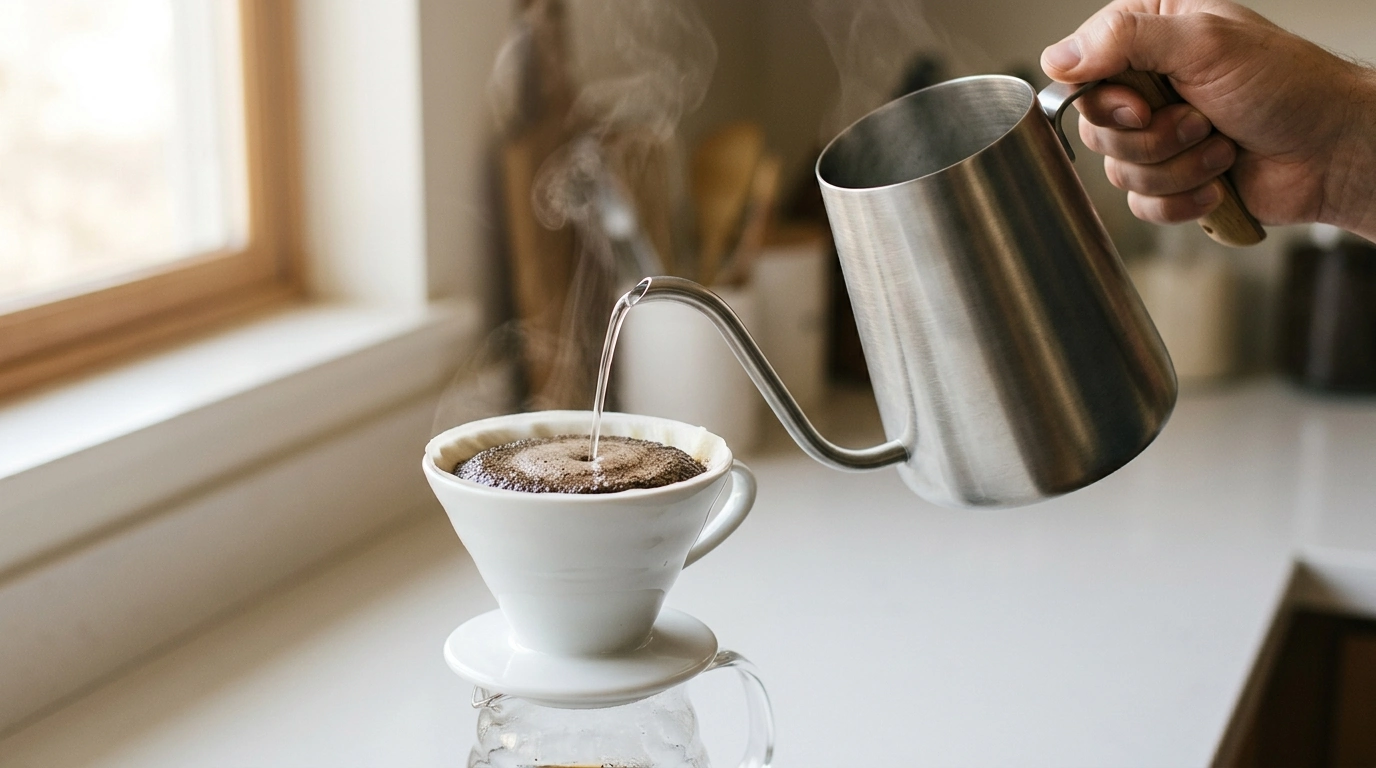
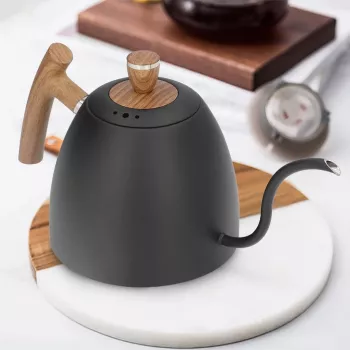
A gooseneck kettle is built for precision: a narrow spout, steady flow, and the control needed to wet grounds evenly. Stainless steel adds durability, easy cleaning, and a timeless look that fits most kitchens. This guide explains what to look for, how to use one well, and how to keep it performing batch after batch. For more guidance, see Gooseneck Coffee Kettle Stainless Steel Drip Pot for Fine ….
The standout feature is the long, narrow spout. It supports a consistent, slow stream that’s easier to aim—especially when pouring in small circles or pulsing water in measured bursts. For further reading, see Gooseneck Kettle Cute Water Boiler 27oz Gooseneck Electric ….
If you enjoy pour-over methods (V60-style drippers, flat-bottom brewers, Chemex-type brewers), a gooseneck kettle can be the difference between “close enough” and repeatably great cups.
Stainless steel is a workhorse material for hot-water tools: it’s resilient, easy to clean, and generally doesn’t hold onto flavors when cared for properly.
For general materials and kitchen-safety context, it’s helpful to reference food-equipment standards and guidance from organizations like NSF and cleaning best practices from the CDC.
Both styles boil water. The difference is what happens after the boil—how confidently you can deliver water where you want it, at the speed you want it.
| Feature | Gooseneck kettle | Standard kettle |
|---|---|---|
| Pour control | High (slow, directed stream) | Low–medium (wider, faster pour) |
| Best for | Pour-over, bloom pours, controlled rinsing of filters | French press fill, quick tea, general hot water |
| Learning curve | Moderate (hand control matters) | Low |
| Spill risk during precise pours | Lower when aimed correctly | Higher when trying to pour slowly |
Many home coffee stations keep both: a standard kettle for fast fills and a gooseneck for controlled brewing.
Small design details can make a kettle feel effortless (or frustrating) during a 2–3 minute pour-over.
Pour-over brewing rewards consistency. The goal is even saturation, steady temperature, and a flow rate that keeps extraction predictable. The Specialty Coffee Association offers useful brewing resources that reinforce these fundamentals.
A practical cue: if the slurry looks like it’s forming “dry islands,” slow down and widen your circles slightly until the surface looks uniformly wet.
You don’t need a built-in thermometer to brew good coffee, but you do need repeatability. Temperature swings can show up as sharp bitterness, thin sourness, or a flat finish.
No. It shines for pour-over because it pours slowly and precisely, but it’s also great for tea, cocoa, oatmeal, and any task where measured hot water helps. Just note it typically pours slower than a standard kettle.
It depends on water hardness and how often you heat water—every few weeks in hard-water areas is common, while soft water may need less frequent descaling. Descale sooner if you see chalky residue, notice reduced flow, or taste dull/off flavors.
Stainless steel is generally non-reactive, so taste issues are usually caused by mineral scale, old water, or leftover residues. Regular rinsing, air-drying with the lid off, and periodic descaling typically keep water tasting clean.







Leave a comment