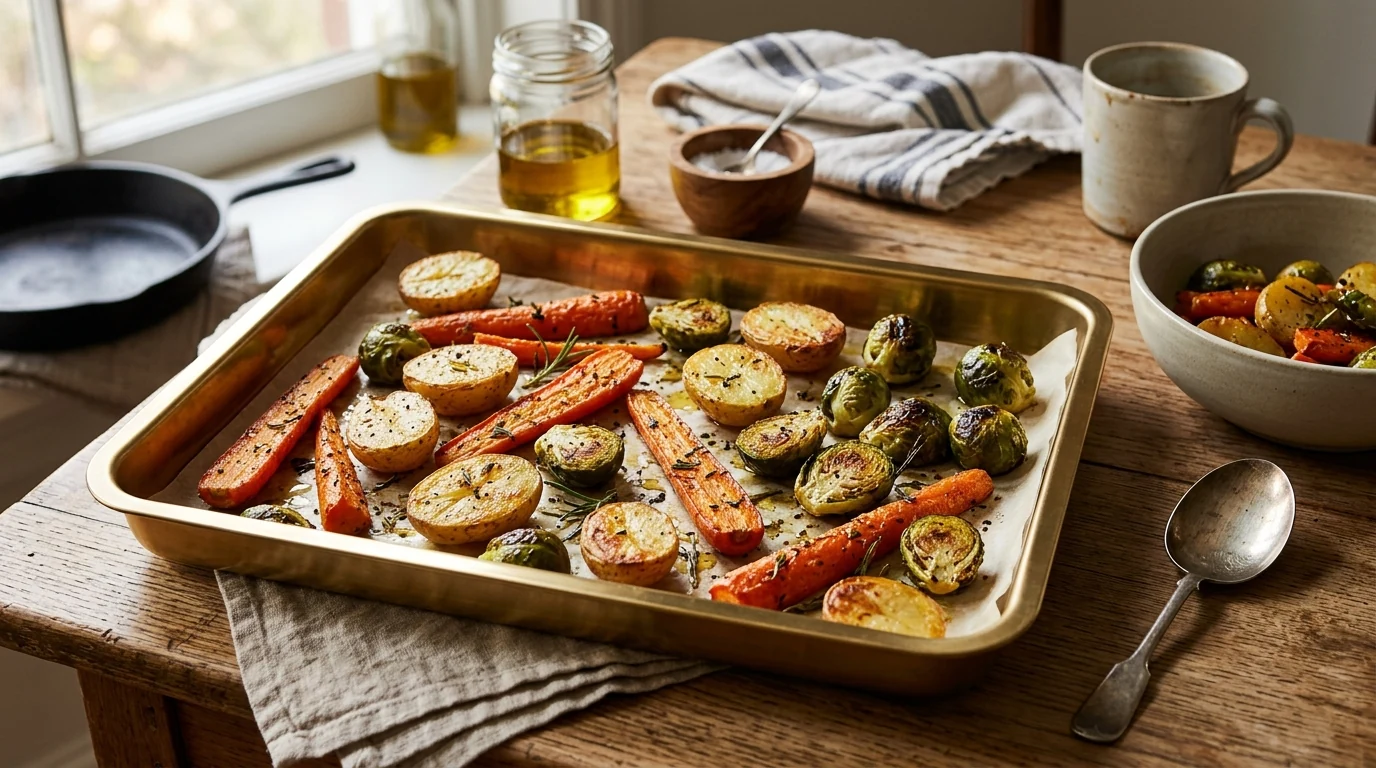
Some kitchen tools earn a permanent spot because they work hard, clean up easily, and look good enough to bring straight to the table. Our Rectangular Golden Stainless Steel Baking Tray is built for that kind of daily cooking—roasted vegetables on a weeknight, cookies for a weekend batch, and a polished serving moment when guests drop by. The rectangular shape keeps portions organized, and stainless steel delivers dependable performance for everything from high-heat roasting to chilled desserts.
A good baking tray should feel like a multi-tool: it steps in for roasting, baking, reheating, toasting, and even oven-to-table serving without slowing you down. The rectangular footprint is especially practical in real kitchens because it makes the most of oven space and keeps food arranged in clean rows instead of drifting into curves.
If you’re building a coordinated table moment, a tray that can go from oven to serving is a quiet upgrade. Pair it with our Scandinavian Handwoven Leaf Placemat – Eco-Friendly Straw Dining Mat for natural texture, or set it on our Bohemian Ethnic Cotton Linen Geometric Tablecloth for Dining & Coffee Tables for a more styled, hosted feel.
Stainless steel is a staple for everyday cooking because it’s durable, resists rust with proper care, and stays neutral for flavor. That means you can roast garlicky vegetables one night, bake buttery pastries the next, and reheat leftovers without carrying over aromas.
| Task | Best setup | Why it helps |
|---|---|---|
| Roasted vegetables | Preheat tray if desired; use a light coating of oil | Encourages browning and helps prevent sticking |
| Cookies and pastries | Line with parchment paper | Easier release and faster cleanup |
| Reheating leftovers | Use a small rack or foil tent when needed | Improves airflow or protects from over-browning |
| Sheet-pan meals | Group ingredients by cook time; add items in stages | Prevents some foods from overcooking while others finish |
With stainless steel, small technique choices make a big difference in browning and release. If you want crisp edges, prioritize heat contact and airflow; if you’re working with sugar or delicate batters, prioritize a liner that releases cleanly.
For safe kitchen habits—especially when moving between raw proteins and ready-to-eat foods—keep a clean workflow: separate prep surfaces, wash hands/tools, and cook to appropriate temperatures. The USDA’s Kitchen Companion is a solid baseline for everyday guidance: https://www.fsis.usda.gov/food-safety/safe-food-handling-and-preparation/kitchen-companion.
Stainless steel rewards a gentle, consistent routine. The goal is to remove residue without grinding it into the surface, then dry fully so the tray stays presentation-ready.
If you’re planning ahead for make-ahead meals, follow reliable storage practices for cooling and refrigeration. New York State Department of Health offers helpful general guidance here: https://www.health.ny.gov/environmental/indoors/food_safety/.
For a cozy, complete place setting, our team likes pairing a sheet-pan dinner with the Handmade Ceramic Noodle Bowl – Creative Round Ramen Soup Deep Bowl for soup, grains, or a side salad—especially when you want the table to feel curated without extra effort.
Yes—stainless steel is durable, versatile for roasting and baking, and stays neutral with flavors. For best release, use a light oil film for roasting or parchment for baked goods like cookies and pastries.
Preheat the tray for roasting when you want deeper browning, use a thin coating of oil, and avoid overcrowding so food roasts instead of steams. For delicate items or sugary glazes, parchment paper can make release and cleanup much easier.
Soak the tray in warm, soapy water to loosen residue, then scrub with a non-scratch sponge or nylon pad. For stubborn spots, use a baking soda-and-water paste, then rinse well and dry fully to minimize water marks.











Leave a comment