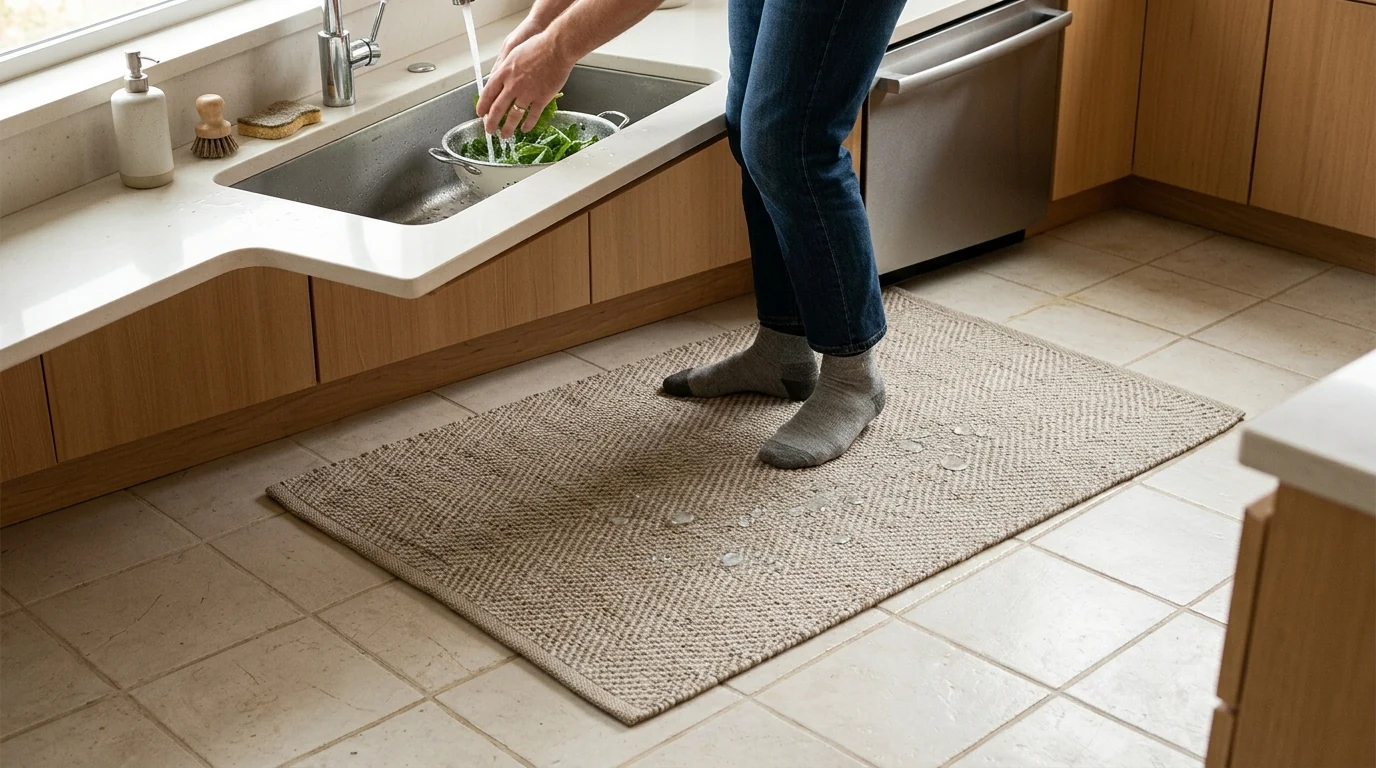
A kitchen rug should do three jobs at once: catch splashes, stay firmly in place, and clean up easily. The Non-Slip Super Absorbent Kitchen Rug with Rubber Backing is built for everyday cooking zones where drips, crumbs, and foot traffic are constant—while the rubber backing helps keep footing steady on common hard floors.
Whether it’s the sink splash zone, a busy prep counter, or the dishwasher landing area, a low-profile woven mat can help keep the floor drier and more comfortable to stand on during long cooking sessions.
High-use kitchen areas demand more from a floor mat than a decorative runner. A practical rug supports steadier steps, helps contain small messes before they spread, and avoids becoming a maintenance headache.
Construction details make a noticeable difference in kitchens because floors are hard, messes happen fast, and movement is constant. A woven top paired with rubber backing focuses on daily function rather than fuss.
For broader safety context around slips and trips, workplace guidance from OSHA highlights how wet walking surfaces and sudden loss of traction can contribute to falls—exactly the kind of risk kitchens can create during busy meal prep.
Absorbency isn’t just a spec—it’s what changes day-to-day cleanup. In the kitchen, the most common messes are small but frequent, which is where an absorbent mat earns its place.
Tip for best results: Blot spills promptly and clean per care guidance to reduce the chance of set-in stains—especially with dark liquids or oily spots.
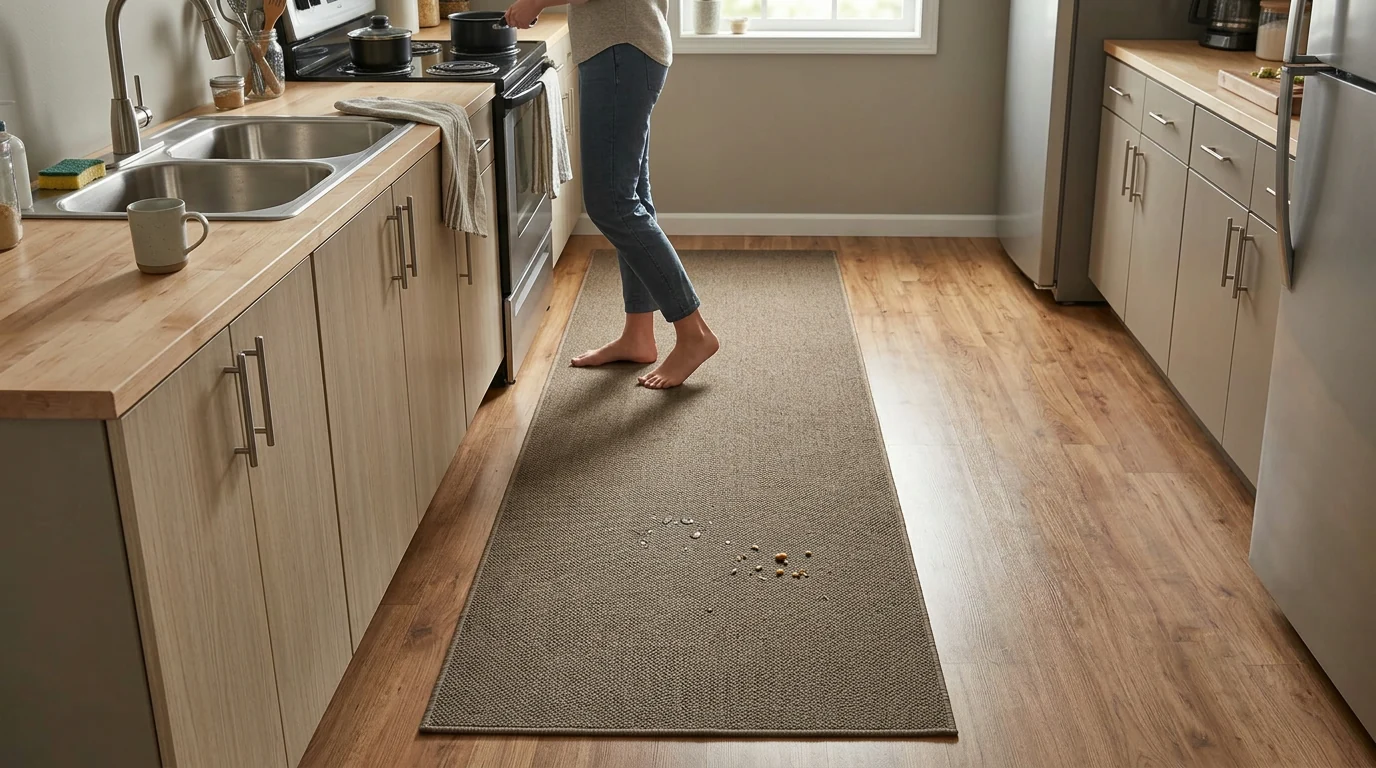
A steady mat supports safer step transitions when moving between sink, counter, and stove—especially when floors are slightly damp. Even with a non-slip backing, setup and placement matter.
| Hazard | Why it matters | Practical fix |
|---|---|---|
| Water near sink | Can create a slick surface and sudden slips | Blot quickly; keep an absorbent mat at the sink run |
| Grease splatter near stove | Oily film reduces friction on hard floors | Wipe floor regularly; spot-clean the rug as soon as splatters happen |
| Rug edge curl or bunching | Creates a trip point | Reposition on a dry floor; avoid placing where doors drag |
For general rug care best practices (vacuuming, spot cleaning, and maintenance tips), the Carpet and Rug Institute offers helpful resources that translate well from living areas to busy kitchen zones.
| Area | Typical mess | Why it’s helpful |
|---|---|---|
| In front of sink | Water splashes, soap drips | Helps keep nearby floor drier and more comfortable to stand on |
| Between sink and stove | Drips while carrying pots/ingredients | Catches small spills before they spread |
| Dishwasher landing zone | Drips from wet dishes | Reduces puddles and tracking |
| Pet bowl corner | Water slosh, food crumbs | Contains mess to a defined area for faster cleanup |
Rubber backing typically grips smooth hard floors well when the surface is clean and dry. Check your flooring manufacturer’s guidance, and avoid leaving moisture trapped underneath for long periods.
Blot spills quickly (don’t rub), then use mild soap and water as needed and rinse if appropriate for the care instructions. Faster cleanup usually improves results for coffee, sauces, and oils.
Some floor finishes can react to certain backings over time, especially with heat, pressure, or moisture. Keeping the area dry, cleaning underneath periodically, and testing in a small spot can help reduce the risk.








Leave a comment