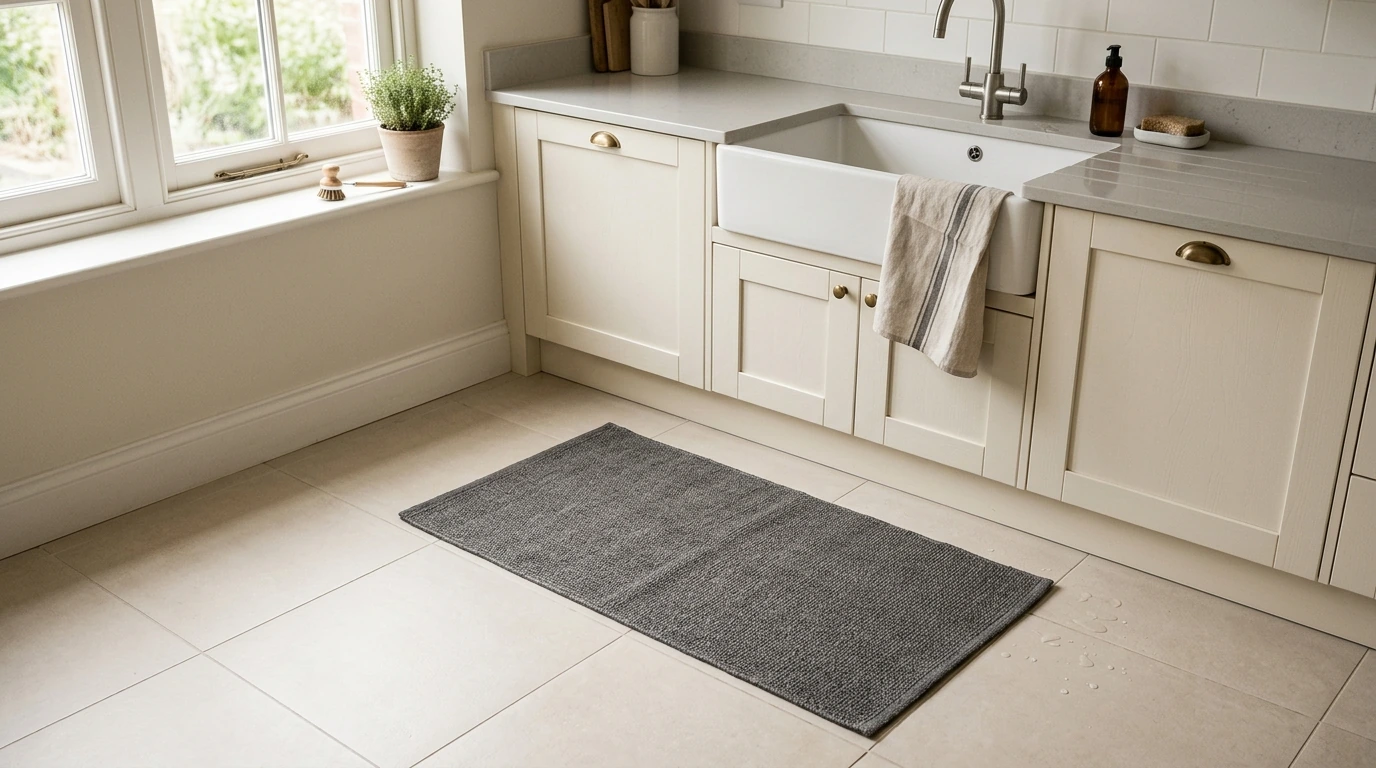
A good kitchen rug should do three things every day: catch splashes, stay put, and feel comfortable underfoot. Our Simple & Elegant Polyester-Cotton Kitchen Rug is designed for busy cooking zones—sink, prep counter, stove—where water drips and crumbs happen. With an absorbent surface, a non-slip backing, and an eco-friendly approach, it’s an easy upgrade for a tidier floor and steadier footing.
Most kitchen messes aren’t dramatic—they’re constant. A practical rug helps you stay ahead of the drip-and-crumb cycle without turning cleanup into a project.
Kitchens are tough on textiles. That’s why a polyester-cotton blend is such a dependable choice: it’s made to handle daily foot traffic and more frequent cleaning than rugs in other rooms.
| Feature | Why it matters in the kitchen | What the blend contributes |
|---|---|---|
| Absorbency | Reduces wet footprints and helps catch splashes | Cotton supports quick soak-up; polyester helps structure |
| Durability | Stands up to daily steps, turning, and chair legs nearby | Polyester helps resist wear; cotton adds comfort |
| Easy upkeep | Kitchen rugs need more frequent cleaning than other rooms | Blend balances washability and long-term use |
| Comfort underfoot | Makes prep time easier on the feet | Cotton softens feel; polyester helps maintain form |
A non-slip base matters most where you move fast and change direction: in front of the sink, stove, and fridge. Our team recommends a simple setup routine so you get consistent grip day after day.
For broader household safety guidance, you can also review the U.S. Consumer Product Safety Commission’s recommendations on preventing falls at home: CPSC — Preventing Falls at Home.
An absorbent rug works like a landing zone: it catches droplets that would otherwise spread across tile or wood and become a bigger cleanup. And “eco-friendly” in a kitchen often looks like choosing items you can reuse and refresh rather than replace.
If you’re interested in overall home environment best practices, the EPA’s indoor air quality resources are a helpful reference point: EPA — Indoor Air Quality (IAQ).
Placement is the difference between a rug that looks nice and a rug that genuinely makes your kitchen easier to run.
Kitchen rugs earn their keep. A small routine helps maintain absorbency, traction, and appearance.
Yes—place it on a clean, dry surface so the backing can grip consistently. Keep dust and moisture from building up underneath, and avoid layering it over another loose rug.
Right in front of the sink and dishwasher, where splashes and drips happen most often. It helps catch water before it spreads into walkways and gets tracked across the floor.
Shake out crumbs or vacuum as needed, then do a deeper clean on a regular cadence based on cooking frequency, pets, and foot traffic. Prompt spot-cleaning is the simplest way to prevent stains from setting in.










Leave a comment