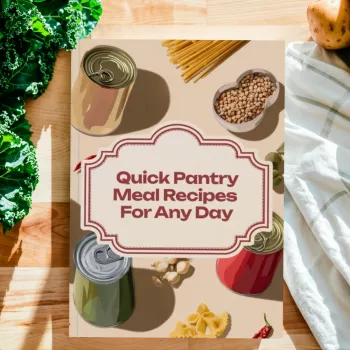
Fast meals don’t have to be bland or repetitive. Our digital pantry cooking guide is designed for the nights when the fridge is nearly empty, the clock is loud, and dinner still needs to feel like dinner. The focus is simple: keep a smart shelf-stable pantry, use a few repeatable flavor shortcuts, and turn everyday staples into satisfying bowls, pastas, soups, and skillet meals—without a long shopping list.
If you want a ready-to-use framework (instead of a one-off recipe that depends on missing ingredients), start with our Quick Pantry Meal Recipes for Any Day | Easy Pantry Cooking Guide | Digital Download eBook for Fast, Flavorful Meals.
Quick pantry cooking is less about “magical” ingredients and more about a predictable method you can repeat with whatever you have. Our team leans on shelf-stable building blocks—pasta, rice, canned beans, canned tomatoes, broth or bouillon, tuna or salmon, coconut milk, jarred sauces, and a tight spice lineup.
Most pantry meals naturally land in the 15–25 minute zone because you’re timing everything to one reliable clock: pasta cook time, a quick simmer to mellow canned tomatoes, or a one-pan heat-through.
To keep your pantry useful (not cluttered with one-off ingredients), build flexibility into the plan: swap beans, swap grains, swap spice profiles. The same “tomato + cumin” path that works with black beans works with chickpeas; the same “broth + soy” bowl works with ramen, rice, or leftover pasta.
When dinner tastes flat, it’s usually missing one of these: acid, umami, aroma/heat, creaminess, or crunch. The good news is that each of those has pantry-friendly fixes.
| Booster | Best with | How to use fast |
|---|---|---|
| Tomato paste | Soups, bean pots, pasta sauces | Toast 1–2 minutes in oil before adding liquids |
| Soy sauce | Rice bowls, noodles, brothy soups | Add 1 tsp at a time; taste before salting |
| Vinegar (any) | Tomato-based dishes, lentils/beans | Stir in 1–2 tsp at the end |
| Curry powder | Coconut milk simmer sauces, chickpeas | Bloom in oil 30 seconds before adding liquids |
| Tahini | Beans, noodles, grain bowls | Whisk with warm water + lemon to make a quick sauce |
| Chili flakes | Everything from pasta to soups | Add early for heat; add late for aroma |
When you’re tired, deciding is often harder than cooking. A simple matrix solves that: pick one from each column—base + protein + sauce direction + finish—and you’ve got a complete meal. Keep timing predictable by choosing one item that “needs cooking” (pasta/rice/noodles) and building everything else while it cooks.
| Base | Protein | Sauce direction | Finish |
|---|---|---|---|
| Pasta | Canned tuna | Garlic + olive oil + chili + lemon | Capers or crushed crackers |
| Rice | Canned beans | Tomato + cumin + smoked paprika | Pickled jalapeños |
| Ramen/noodles | Eggs | Broth + soy + ginger (powder OK) | Sesame seeds + scallions (optional) |
| Couscous | Chickpeas | Coconut milk + curry powder | Lime + crunchy nuts |
| Tortillas | Black beans | Salsa + a spoon of tomato paste | Hot sauce + crispy onions |
For food safety basics around storing and reheating leftovers, you can reference the FDA’s refrigerator & freezer storage guidance and the USDA FoodKeeper app. For a simple “balanced plate” reminder when you’re building bowls, Harvard’s Healthy Eating Plate is a helpful visual.
It’s a downloadable eBook built around fast, pantry-first meals, with practical methods, mix-and-match ideas, and quick recipes/approaches designed to minimize shopping. You’ll use repeatable flavor shortcuts so staples like beans, tomatoes, rice, and noodles stay exciting.
Yes—this is pantry-first cooking, so you can still make satisfying meals with shelf-stable ingredients. Fresh add-ons like lemon, onions, greens, and eggs are optional, and the method supports easy substitutions when they aren’t available.
It’s a digital download made for quick on-screen use, so it’s easy to keep on your phone or tablet while you cook. Printing is typically possible after download depending on your device and file settings.











Leave a comment