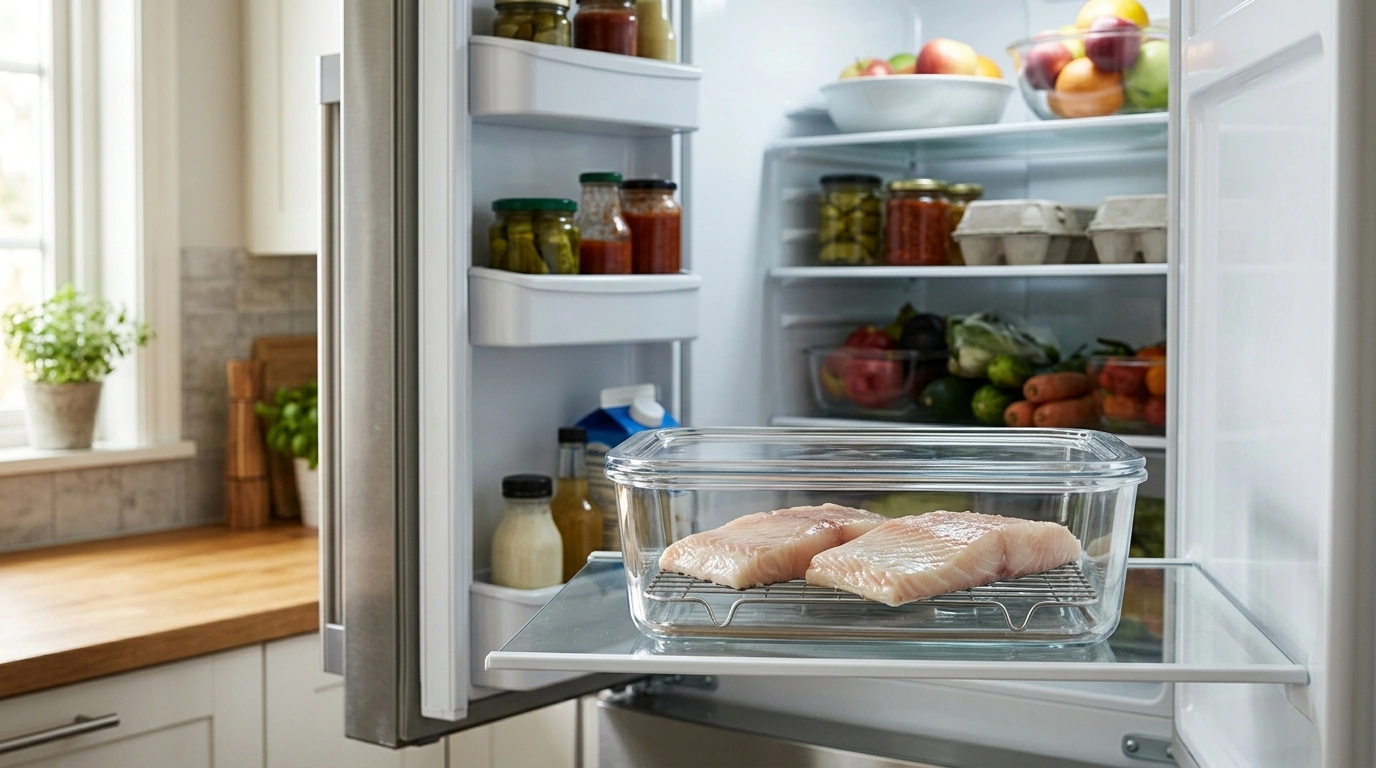
Seafood can be the fastest path to a restaurant-level meal—or the quickest way to lose freshness if timing and temperature slip. Our team put this seafood handling guide together around simple, repeatable habits you can use every time: shopping cues, cold-chain basics, safe seafood storage, thawing, prep, cooking targets, and clean-up. We’ll also share practical AI planning ideas you can reuse so good ingredients don’t end up forgotten in the back of the fridge.
The best seafood nights start before you even get home. Quality drops when seafood warms up, and safety risk rises as it spends time above refrigerator temperature.
You don’t need complicated rules at the counter—just a quick, consistent scan of appearance, smell, and texture.
| Seafood type | Good signs | Skip if you see/smell this | Best next step at home |
|---|---|---|---|
| Fish (fillets) | Glossy surface; firm texture; mild smell | Dry edges; sticky film; sour/strong odor | Cook within 1–2 days or freeze same day |
| Whole fish | Clear eyes; red gills; tight scales | Cloudy eyes; dull gills; soft belly | Keep on ice in fridge; cook soon |
| Shrimp | Clean smell; firm bite; intact shells | Ammonia smell; mushy texture; blackened heads (quality drop) | Peel/devein when ready; keep very cold |
| Mussels/clams | Closed shells; fresh sea smell | Open shells that don’t close; cracked shells | Store in breathable container; cook within 1–2 days |
Storage is where most “fishy” problems begin—not because seafood is inherently smelly, but because moisture and temperature aren’t controlled.
For deeper step-by-step routines you can keep on your phone, our team created the Seafood Handling Guide for Freshness and Safety | Digital Download eBook | Safe Seafood Storage, Preparation & AI Tips.
If you’re building a cozy seafood night—ramen-style broths, chowders, or seafood pasta—our Handmade Ceramic Noodle Bowl – Creative Round Ramen Soup Deep Bowl is a sturdy, heat-friendly way to serve without rushing (and without juggling shallow plates).
If you want a single reference you can rely on every time, our Seafood Handling Guide for Freshness and Safety | Digital Download eBook | Safe Seafood Storage, Preparation & AI Tips organizes the essentials into quick checklists: what to do right after unpacking, how to store seafood without off-odors, how to thaw safely, and how to keep raw-to-cooked transitions clean.
For easy table protection during seafood prep and serving (especially with drippy sauces or chilled shellfish platters), our Scandinavian Handwoven Leaf Placemat – Eco-Friendly Straw Dining Mat helps keep your setup neat and your cleanup faster.
For most fresh fish, plan to cook it within 1–2 days, and sooner is better if your fridge runs warm. Keep it sealed in a leak-proof container on the lowest shelf, and freeze it the same day if you won’t cook it in that window.
The safest method is thawing overnight in the refrigerator on a tray to catch drips. For faster thawing, use a sealed bag in cold water (change the water every 30 minutes) and cook immediately after it’s thawed.
Yes—if you cool it quickly, seal it well, and keep it cold in the refrigerator. Keep raw seafood separate from ready-to-eat foods, and plan to reheat seafood gently to steaming hot so it stays safe without drying out.










Leave a comment