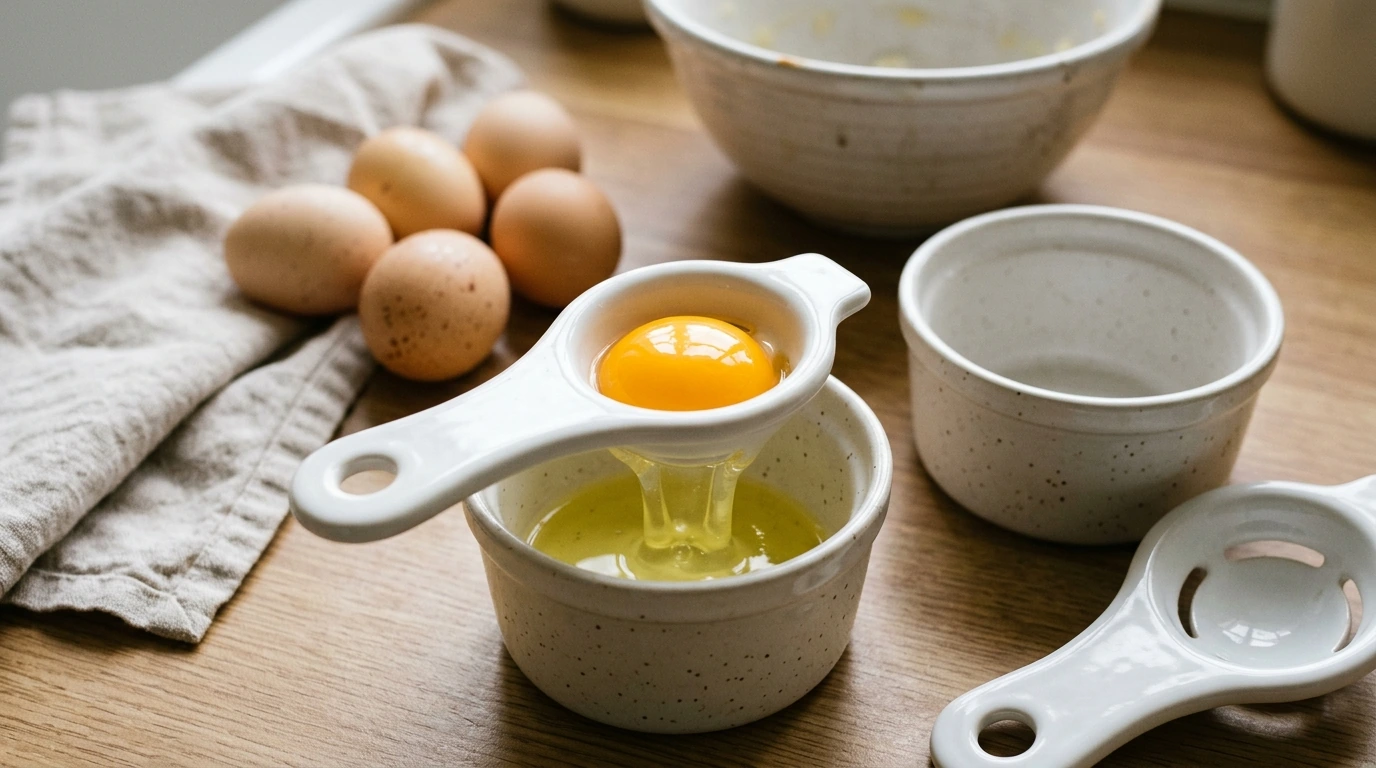
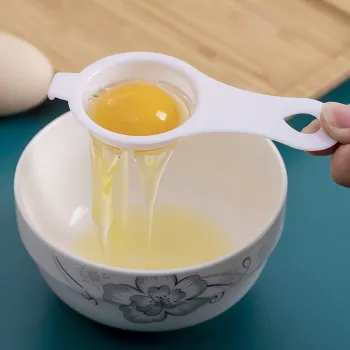
Separating eggs sounds simple—until a yolk breaks, whites turn cloudy, and the bowl needs a reset. A dedicated yolk separator keeps the process tidy and consistent, especially when recipes depend on clean whites or perfectly intact yolks. Our team likes this 2-piece handheld set for quick daily use: crack, separate, and keep moving with less mess and less waste.
When you cook often, egg separation stops being a “baking-only” task and becomes a repeatable kitchen step. A separator helps you get the same result every time—without rushing or improvising over the sink.
| Cooking goal | What can go wrong without a tool | What improves with a separator |
|---|---|---|
| Stiff peaks for meringue | Trace yolk prevents whites from whipping properly | Whites stay clearer and whip more reliably |
| Silky custards and sauces | Broken yolks can splash into whites or get over-handled | Yolks stay intact and easy to portion |
| Batch baking (cookies, cakes) | Slow, messy separation adds time and dishes | Faster workflow with one dedicated step |
| Meal prep (egg white omelets) | Inconsistent separation means wasted eggs | Quick repeatable routine per egg |
A simple routine is what makes separation feel effortless. If you’re separating more than one egg, set yourself up so one mistake doesn’t take down the whole batch.
If food safety is top-of-mind (especially for sauces or desserts that may be lightly cooked), handle eggs with the same care you would raw meat: keep them refrigerated, wash hands after contact, and avoid cross-contamination. The USDA and FDA both publish clear, practical guidance for storing and handling eggs safely.
Some kitchen tools pay for themselves in the first week because they remove friction from tasks you repeat. Egg separation is one of those tasks.
Egg proteins dry quickly and can cling to surfaces, which is why a fast rinse right after use is the easiest “maintenance” you can do.
For extra handling and storage pointers (including why refrigeration matters and how to reduce risk), the American Egg Board is a solid reference.
Yes. Yolk contains fat, and even a small trace can interfere with whipping whites into a stable foam, reducing volume and structure in meringues and sponge-style cakes.
Many people get cleaner separation with cold eggs because the yolk is firmer. If a recipe calls for room-temperature whites for better volume, separate them cold first, then let the whites warm up as directed.
Use a buffer bowl: crack one egg into a small bowl, separate it, and only then add the white to your main bowl. This prevents one broken yolk from contaminating an entire batch of whites.










Leave a comment