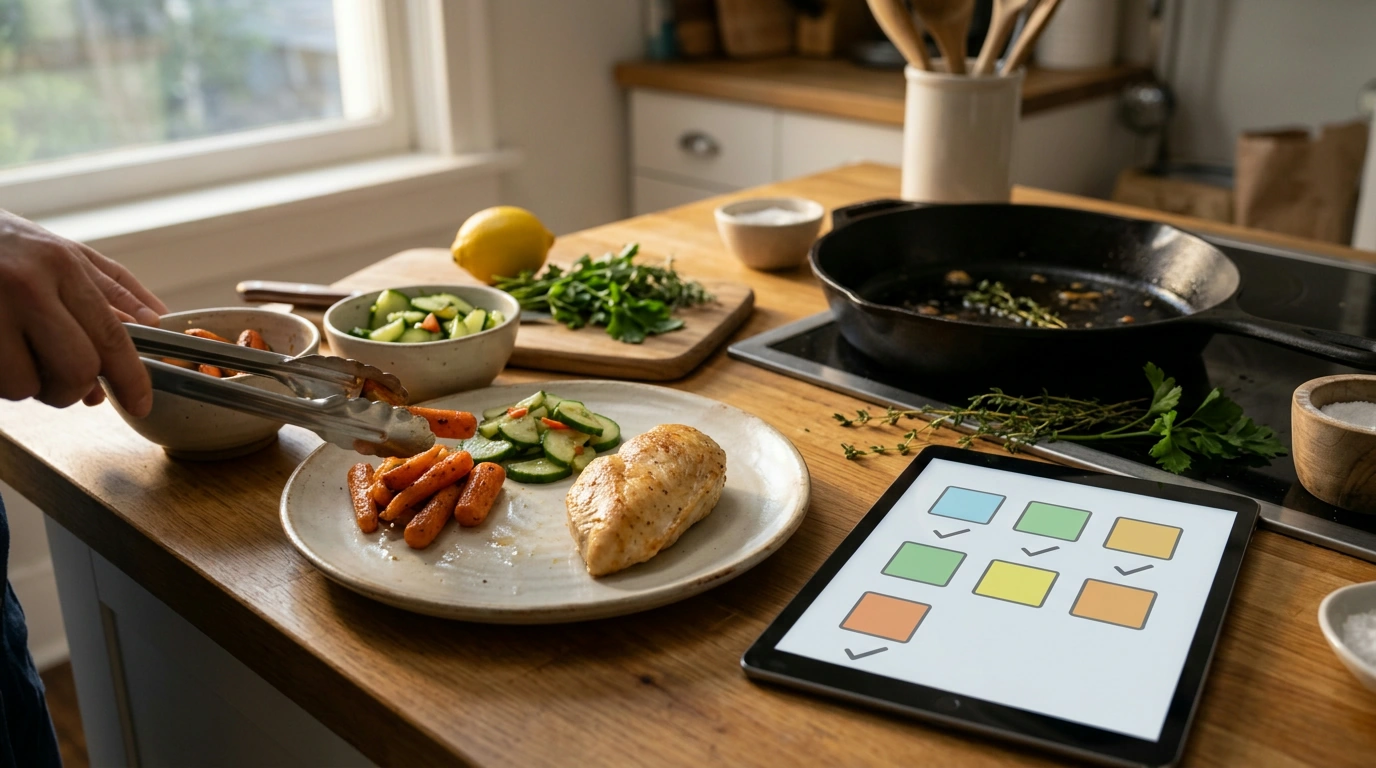
Planning a complete meal often stalls at the same point: the main dish is decided, but the sides feel repetitive or mismatched. An AI-driven side dish suggestion checklist streamlines the process by generating balanced pairings, tracking what’s been used recently, and turning a “what goes with this?” moment into a quick, repeatable routine.
If weeknights tend to default to the same rice-and-steamed-broccoli combo, a structured checklist helps you rotate flavors, textures, and colors without adding mental load. It also makes it easier to build plates that align with everyday nutrition guidance like the USDA’s MyPlate Plan and the Harvard Healthy Eating Plate framework from the Nutrition Source.
A good side-dish checklist doesn’t just list recipes—it acts like a decision tree that keeps meals varied while staying realistic for busy schedules.
| Main dish | Quick side | Comfort side | Fresh/bright add-on |
|---|---|---|---|
| Grilled chicken | Garlic green beans | Roasted potatoes | Lemon-herb salad |
| Salmon | Cucumber dill salad | Rice pilaf | Quick pickled onions |
| Beef tacos | Charred corn | Black beans | Cilantro-lime slaw |
| Pasta marinara | Sautéed zucchini | Garlic bread | Arugula salad |
| Vegetable curry | Crisp cucumber raita | Basmati rice | Mango chutney |
For a ready-to-use format, the AI-Driven Side Dish Suggestions digital checklist is designed to make these pairings quick to generate and easy to repeat week after week.
Helpful suggestions feel “obvious in hindsight.” The best systems narrow options based on what’s already happening in your kitchen, so you don’t end up with sides that fight your timeline or equipment.
One simple rule keeps suggestions grounded: every side should either (1) add a missing food group, (2) add contrast (crunch/acid/heat), or (3) simplify prep by sharing ingredients with the main.
When planning feels effortless, it’s usually because decisions are made in a consistent order. This workflow works whether you cook daily or batch-cook on Sundays.
For soup nights, ramen nights, or grain bowls, serving gets easier when every component fits in one vessel. A deep bowl like the Handmade ceramic noodle bowl for soups and ramen nights supports meals where a main and multiple sides become one cohesive bowl.
They match the main dish’s flavor profile and typical pairings (like tacos with slaw and beans, or curry with rice and raita), then add a balancing element such as acidity, crunch, or a cooling sauce.
Yes—by reusing overlapping ingredients, prompting pantry-first choices, and favoring leftover-friendly sides. For example, the same lemon and herbs can flavor a chicken marinade one night and a bright salad dressing the next.
Choose no-cook, stovetop, microwave, or grill sides that can be done in 5–10 minutes, like a quick chopped salad or a fast sauté. This keeps the oven dedicated to the main while sides happen in parallel.








Leave a comment