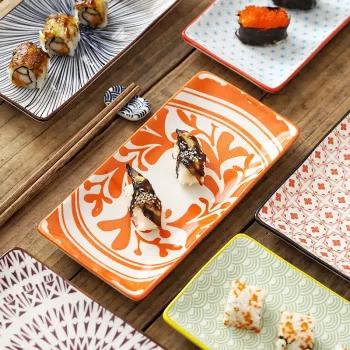
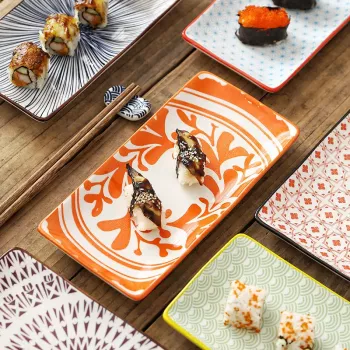
A rectangular ceramic plate brings clean lines to the table while keeping plating practical—easy to portion, easy to pair with other dinnerware, and ideal for everything from sushi nights to weeknight mains. This Nordic-style design suits modern, minimalist settings and helps food look organized without feeling fussy. For more guidance, see Winter 2014 Activity Guide.
Round plates are classic, but a rectangular silhouette changes how food sits on the surface—and that small shift can make everyday meals feel more intentional. The straight edges help align sushi pieces, tapas, desserts, and composed salads without crowding, so the presentation reads clean even when you’re serving something casual. For further reading, see Sushi: Food for the Eye, the Body and the Soul.
The long shape also supports “main + sides” plating: place a protein at one end, then build a side of vegetables, rice, or salad along the other end. Because ceramic holds temperature better than many lightweight materials, hot foods tend to stay warm and chilled bites stay cooler a bit longer—handy when you’re grazing slowly through appetizers.
Visually, a neutral Nordic look layers easily with wood, linen, and other stoneware in mixed place settings, so you can add it to what you already own without everything needing to match perfectly.
Minimalism works best when it’s functional. A streamlined rectangular plate keeps the focus on the food while still looking deliberate for hosting. The footprint is also efficient: it maximizes usable space on crowded tables, grazing boards, and buffet lines, where round plates can waste space at the edges.
A smooth glaze matters more than people expect. Sauces, oils, and marinades release more easily during cleanup, and wiping the surface between courses is quicker. Depending on what you’re serving, this style can act as a shared platter for small bites or an individual plate for lunch-sized portions—especially for meals like teriyaki salmon with cucumber salad, or dumplings with a neat row of toppings.
This shape shines when you want natural “sections” without using dividers. For sushi, line up nigiri or maki in rows and keep pickled ginger and wasabi at one end for a tidy presentation. For snacks, the rectangular space naturally separates items like cheese, fruit, olives, or pastries—making it easier for guests to pick without mixing flavors.
For main courses, think lengthwise: grilled fish or chicken across the center, roasted vegetables along one side, and a small salad or rice portion at the other end. Desserts also benefit from the geometry—bar cookies, layered slices, or a trio of tasting portions look balanced rather than scattered.
| Occasion | What to Serve | Plating Tip |
|---|---|---|
| Sushi night | Maki rolls, nigiri, soy dish on the side | Keep sauce in a small ramekin to protect the glaze from prolonged soaking |
| Tapas & snacks | Charcuterie bites, crackers, dips | Place dips at the ends to avoid crowding the center |
| Weeknight dinner | Protein + two sides | Angle the protein diagonally for a restaurant-style look |
| Entertaining | Shared appetizer platter | Build in “lanes”: crunchy items, soft items, then garnish |
Ceramic dinnerware is built for daily use, but a few habits help it stay looking new. Avoid sudden temperature changes (for example, moving a cold plate straight into high heat), since thermal shock can increase the chance of cracking. After serving very hot foods, let the plate cool a bit before washing.
For cleanup, use mild dish soap and a non-abrasive sponge to preserve the glaze. If your kitchen shelves get busy and you stack plates often, a soft liner between pieces can help prevent scuffing and tiny surface marks—especially if you’re frequently pulling them in and out for quick lunches and snacks.
If you’re looking for one plate that can bounce between casual snacking and more composed plating, the Nordic Ceramic Rectangular Plate for Sushi, Snacks & Main Courses is a practical go-to. Its clean rectangular shape suits modern dining spaces, and it works well for sushi, appetizers, snack assortments, and weeknight mains.
To complete the look (and make serving easier), pair it with a natural base layer like the Scandinavian Handwoven Leaf Placemat – Eco-Friendly Straw Dining Mat. For meals that mix shapes—like ramen night with side dishes—add a deeper round option such as the Handmade Ceramic Noodle Bowl – Creative Round Ramen Soup Deep Bowl. And if you want an easy way to soften the overall setting, the Bohemian Ethnic Cotton Linen Geometric Tablecloth for Dining & Coffee Tables brings texture while still layering nicely with Nordic-inspired ceramics.
Rectangular plates make sushi easier to line up in clean rows, and the straight edges help with spacing and portioning. Round plates still work well, but a rectangular shape tends to look more organized for sushi sets.
Wash with mild soap and a non-abrasive sponge, and skip harsh scouring pads that can dull the finish over time. Let the plate cool before washing after very hot foods, and avoid rapid temperature changes to help prevent cracking.
Yes—ceramic is well-suited for serving hot mains, and it can help retain warmth during the meal. If desired, pre-warm the plate with hot water, dry it thoroughly, and avoid extreme temperature swings to reduce the risk of thermal shock.









Leave a comment